Best Baroque Bob Hairstyle Ideas for Thin Hair 2026 — Volume, Drama, and Elegance in One Cut
Discover the ultimate guide to the best baroque bob hairstyle ideas for thin hair in 2026. Learn how graduated layers, internal texture, and 17th-century-inspired drama can transform limp, fine hair into a voluminous masterpiece. Includes styling tips, product guides, and expert salon advice.
There is a particular kind of frustration that comes with having thin hair. It is a quiet, daily battle against gravity. You sit in the salon chair, scrolling through Pinterest, showing your stylist photos of women with hair so thick it looks like a structural marvel. Your stylist nods, the scissors fly, and for about forty-five minutes, you look like a movie star. The professional blow-dry, the high-end round brush, and the precisely applied expensive mists work a temporary miracle.
Then you go home. You wash it once. And your hair goes back to its default setting: lying flat, looking limp, and refusing to hold even a whisper of a wave.
If you have spent your life thinking the problem is your hair, it’s time for a perspective shift. The problem isn’t your hair; the problem is that you are likely trying to force a “thick hair cut” onto a “thin hair canvas.” In 2026, the beauty world has finally pivoted toward a solution that doesn’t require extensions or a prayer: the Baroque Bob.
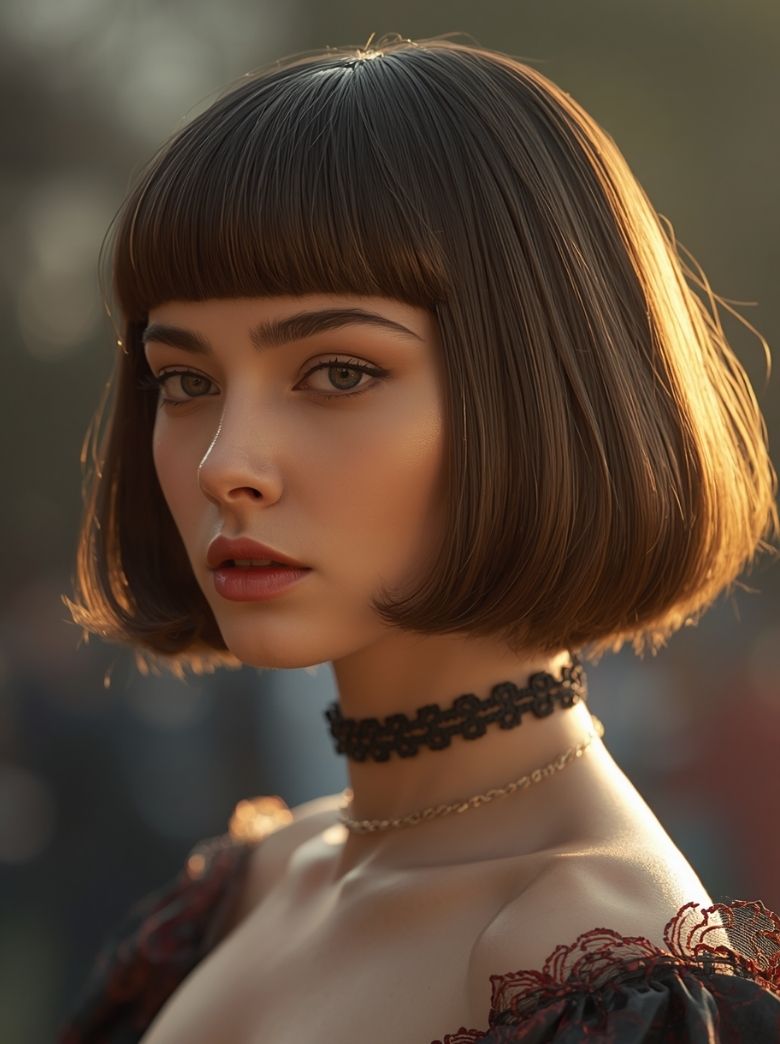
This isn’t just another trend. It is a structural redesign of the classic bob, specifically engineered to create the illusion of density, richness, and drama. Whether your hair is fine, thinning, or just naturally lacking in the volume department, the Baroque Bob is the definitive answer for 2026.
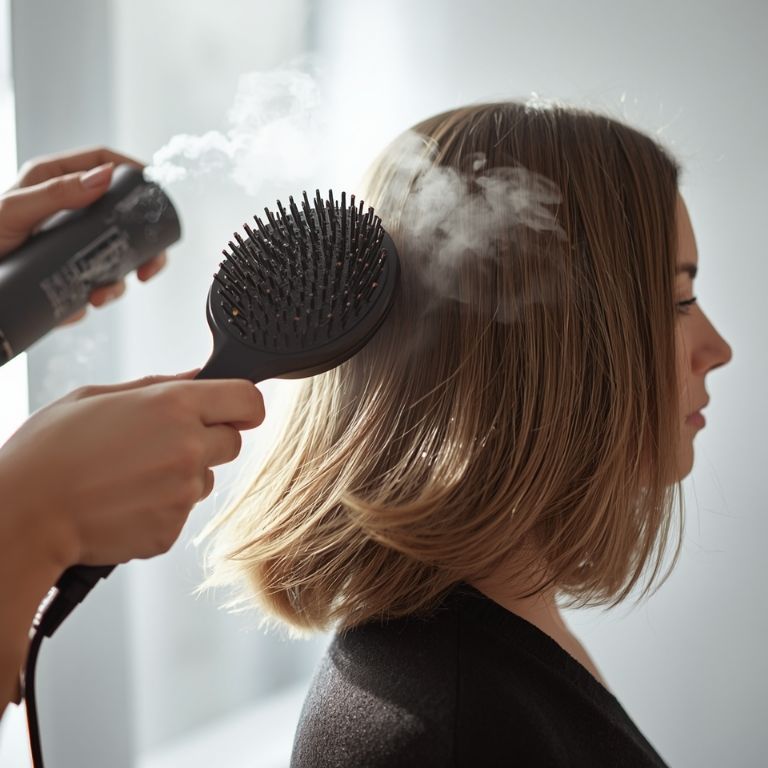
What Exactly Is a Baroque Bob Hairstyle?
To understand the Baroque Bob, we have to look back at the art movement that inspired it. The Baroque period (roughly 1600–1750) was defined by “grandeur, sensuous richness, drama, dynamism, and movement.” It was the opposite of minimalism. It was about curves, ornate details, and a sense of abundance.
When we apply this to a 2026 hair trend, the Baroque Bob isn’t just a short haircut. It is a bob that prioritizes visual weight. Unlike the “Scandi-Bob” (which is blunt and flat) or the “Wolf Cut” (which can often make thin hair look even thinner due to excessive shagginess), the Baroque Bob uses intentional, curved layering to build a silhouette that looks expensive and full.
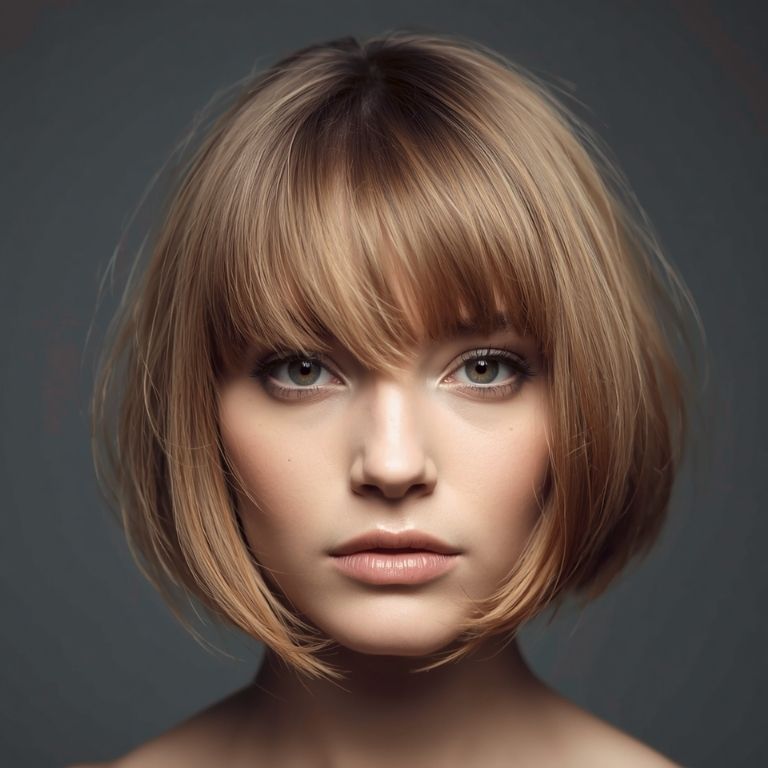
The Anatomy of a Baroque Bob
| Component | Technical Detail | Impact on Thin Hair |
| Weight Line | Positioned usually at the jaw or slightly below. | Prevents the hair from looking “see-through” at the bottom. |
| Graduation | Shorter layers underneath supporting longer ones on top. | Acts like a “shelf” to push the hair outward and up. |
| Internal Texture | Point-cutting inside the hair rather than on the surface. | Creates air pockets that mimic thickness without frizz. |
| Face-Framing | Curved “C-shape” layers around the cheekbones. | Adds structural interest and hides sparse hairlines. |
| The “Flip” | Ends that are either rounded under or flicked out. | Creates a wider visual footprint for the hair. |
Fine vs. Thin: Why Your Current Cut Might Be Failing You
Before we dive into the specific styles, we need to clear up a common misconception. Most people use “fine” and “thin” interchangeably, but they are different biological realities:
- Fine Hair: Refers to the diameter of each individual strand. Your strands are skinny.
- Thin Hair: Refers to the density (how many hairs you have per square inch). You have fewer strands.
If you have thin hair, a blunt cut can sometimes make the lack of density very obvious. If you have fine hair, a blunt cut can look heavy and greasy within hours. The Baroque Bob works for both because it focuses on Aerodynamics and Architecture. By creating curved layers, we are literally allowing air to pass between sections of hair, which prevents them from clumping together and looking like a single, flat sheet.
Best Baroque Bob Hairstyle Ideas for Thin Hair 2026
The following six variations represent the pinnacle of hair design for the May 2026 season. Each one addresses a specific “pain point” of thin hair.
1. The Curved Graduation Bob (The “Structure” Cut)
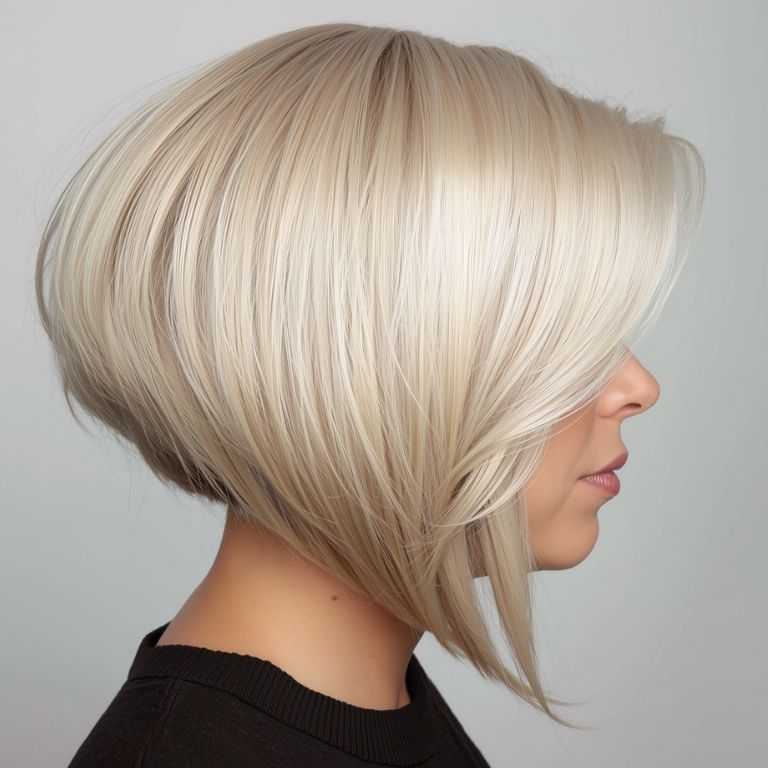
This is the “Gold Standard” for thin hair. In a standard bob, all the hair is cut to one length. In a Curved Graduation Bob, the stylist cuts the hair slightly shorter at the nape of the neck and gradually gets longer toward the front.
- The Science: Because the hair is shorter in the back, it is lighter. This prevents the back from going flat. These shorter hairs act as a foundation, literally propping up the longer hair on top.
- Why it’s Viral in 2026: It offers an “Old Money” aesthetic that looks incredibly polished with minimal effort.
- Best for: Women who work in professional environments and need a “wash-and-wear” style that still looks like a $300 haircut.
You May Like : 10 Short Milky Nail Ideas for 2026 That Look Expensive Without Trying
2. The Soft Wave Baroque Bob (The “Volume” Cut)
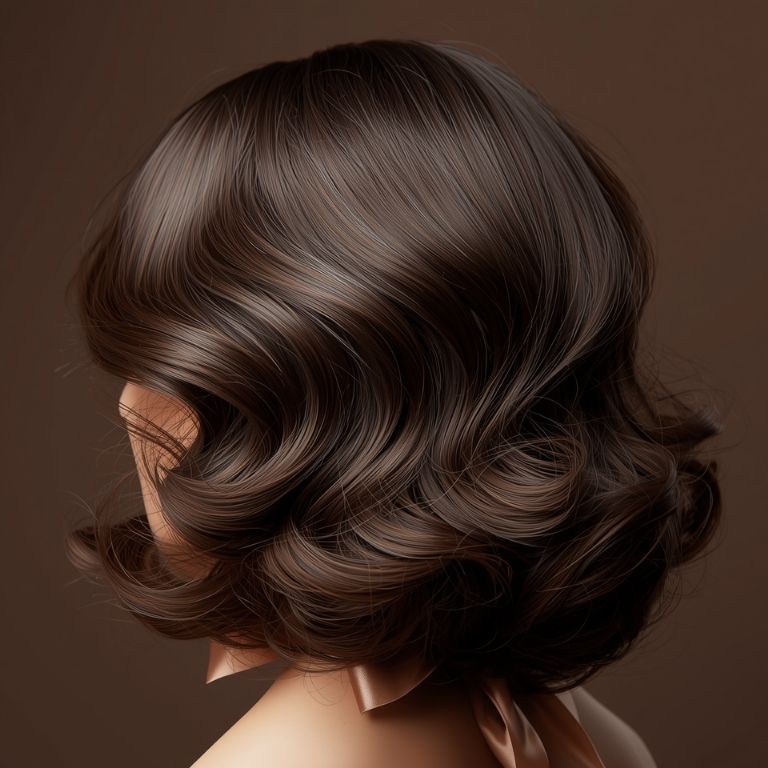
If you look at Pinterest in May 2026, you will see this style everywhere. It takes the graduated bob and adds broad, 17th-century-inspired waves.
- The Science: A wave takes a straight line and turns it into a “S” shape. This “S” shape takes up more horizontal space. When you have thin hair, taking up more space is the goal.
- Styling Tip: Do not use a small curling iron. Use a large 1.5-inch barrel. You aren’t looking for curls; you are looking for bends.
- Why it’s Viral: It fits perfectly into the “Coquette” and “Romantic” aesthetics dominating social media.
3. The Textured Internal Layers Bob (The “Density” Cut)
The biggest fear for someone with thin hair is “layers.” Usually, layers mean “taking hair away.” But Internal layers are different.
- The Science: The stylist uses a technique called “point cutting” on the middle sections of the hair. This creates tiny gaps. These gaps prevent the hair from laying flat against itself. It’s like adding a “crinoline” or a petticoat under a dress—you don’t see the structure, you just see the volume it creates.
- Best for: Those with very limp hair that usually refuses to hold any volume at the crown.
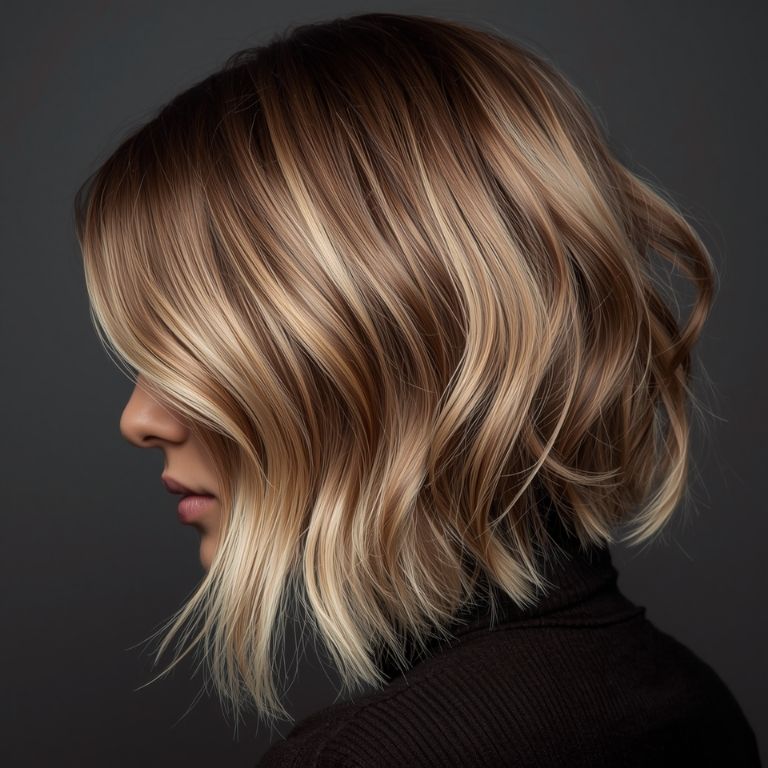
4. The Face-Framing “C-Cut” Baroque Bob
This style focuses on the front. In 2026, we are seeing a shift away from the harsh “Money Piece” highlights toward structural framing.
- The Science: By cutting “C” shapes that curve toward the chin, you create a focal point. Because the front of our hair is often where we have the most breakage or thinning (from ponytails or heat), these curved layers “camouflage” those thin areas.
- Visual Impact: It makes the hair look like it’s moving forward, which creates a “fuller” profile in photos.
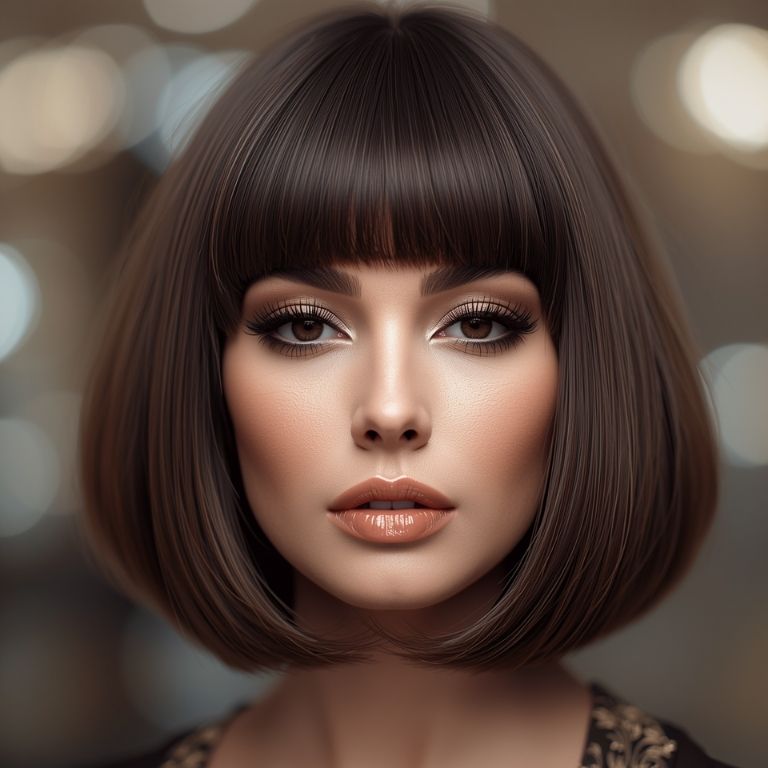
5. The Blunt-Top / Textured-Bottom Bob
This is the “Modern Baroque” take. The top 3 inches of the hair are kept sleek and blunt, while the bottom 3 inches are heavily textured and layered.
- The Science: This creates a “triangle” effect—but in a stylish, intentional way. By keeping the top sleek, you don’t have to worry about “frizzy volume.” By making the bottom textured, you create the “drama” that characterizes the Baroque style.
- Why it Works: It is the easiest style to maintain for those who aren’t great with a blow-dryer.
6. The Wispy Curtain Fringe Baroque Bob
A fringe (bangs) on thin hair is usually a disaster—it either looks “piecey” or greasy. But the Baroque version uses a “Curtain” style that is very wide and very wispy.
- The Science: A wide curtain fringe creates a horizontal line across the face. Horizontal lines make things look wider. By making your “head” of hair look wider at the front, the rest of the bob looks significantly thicker by comparison.
- Styling Tip: Use a tiny bit of dry shampoo on the fringe immediately after drying, even if your hair is clean. This prevents the thin strands from clumping together during the day.
How to Talk to Your Stylist: The 2026 Terminology Guide
One of the main reasons people with thin hair leave the salon disappointed is a communication breakdown. You say “volume,” and the stylist hears “layers.” You say “thick,” and the stylist hears “blunt.”
To get a true Baroque Bob, use these specific terms:
- “Low-Elevation Graduation”: This tells the stylist you want the back to have some lift, but you don’t want a “stack” like a 2010-era “Karen” cut.
- “Point-Cutting for Internal Volume”: This asks them to create texture inside the hair rather than on the ends.
- “Avoid the Razor”: Razor cuts are amazing for thick hair to remove bulk, but they are the enemy of thin hair. Razors can fray the ends of thin hair, making it look frizzy and sparse. Ask for shears only.
- “The Weight Line”: Ask them where they intend to put the weight line. For thin hair, it should usually sit exactly at the jawline or 1 inch below. Any higher and it looks like a bowl cut; any lower and the weight of the hair will pull it flat.
The 2026 Home Styling Masterclass: From Flat to Full
Getting the cut is only 50% of the battle. The other 50% happens in your bathroom. Because we are in 2026, we have access to better technology and cleaner formulations than ever before.
Step 1: The “Reverse Wash” Technique
If you have thin hair, traditional conditioning can be your downfall. The conditioner sits on the hair, weighs it down, and creates a film.
- The Move: Apply conditioner to the ends of your hair before you get it wet. Then, rinse and shampoo only the roots. The “run-off” of the shampoo will clean the conditioner away, leaving the hair soft but not “coated.”
Step 2: The “Damp-Mousse” Application
Mousse has made a massive comeback in 2026. Forget the crunchy, sticky mousses of the 90s. Modern mousses are “aerated polymers.”
- The Move: While hair is 60% damp, apply a golf-ball-sized amount of volumizing mousse to your comb, not your hands. Comb it through from roots to mid-lengths. This ensures every single strand is coated evenly.
Step 3: The “Directional” Blow Dry
Most people blow dry their hair by pointing the nozzle down. This is the fastest way to flatten thin hair.
- The Move: Flip your hair upside down until it is 90% dry. Then, flip back up and use a ceramic round brush. Use the brush to pull the hair up and away from the scalp. The ceramic barrel acts like a curling iron, “setting” the Baroque curve into the hair.
Step 4: The “Cool Shot” Secret
Every hair dryer has a “Cool” button. Most people ignore it.
- The Move: After you have wrapped a section of hair around the brush and applied heat, hit it with the “Cool Shot” for 10 seconds while it is still on the brush. Hair is like plastic; heat melts it into a shape, and cold sets it. If you skip the cool shot, the volume will fall out before you even leave the house.
Essential Product Guide for the Baroque Bob (May 2026 Edition)
When shopping for products, look for “Weightless” and “Volumizing” labels, but check the ingredients.
| Product Type | Look for These Ingredients | Avoid These Ingredients |
| Shampoo | Salicylic Acid (cleans the scalp), Rice Protein. | Heavy Silicones (Dimethicone), Sulfates. |
| Volumizer | VP/VA Copolymer (creates a film that thickens the hair). | Natural Oils (Coconut, Argan) — they are too heavy for thin hair. |
| Dry Shampoo | Rice Starch, Zeolite. | Talc (can look chalky and weigh down hair). |
| Finishing Spray | Flexible Polymers. | High-Alcohol sprays (they dry out thin hair, causing breakage). |
Seasonal Trends: Why May 2026 is the Month of the Baroque Bob
As we enter May, the weather is shifting. Humidity is rising, and summer events—weddings, graduations, garden parties—are filling up the calendar.
- Humidity Resistance: The Baroque Bob is actually better for humidity than a blunt cut. Because it has internal texture, if your hair “poofs” a little in the heat, it actually adds to the Baroque aesthetic rather than looking like a mistake.
- Wedding Guest Ready: This style is incredibly easy to dress up. A simple velvet ribbon or a pearl clip on one side instantly transforms the Baroque Bob into a formal “Aesthetic” look.
- The “Pinterest” Factor: In May 2026, the “Cottagecore” trend is evolving into “Regency-Core.” The Baroque Bob, with its soft curves and romantic silhouette, is the ultimate accessory for this fashion movement.
Troubleshooting Common Baroque Bob Issues
“My hair looks like a triangle.”
- The Fix: This usually happens if the layers are too short at the top. Ask your stylist to “soften the weight line” using thinning shears only at the very tips of the hair to allow the bottom to tuck inward.
“It goes flat after two hours.”
- The Fix: You are likely using too much product. Thin hair can only “carry” so much weight. Try “Dry Texturizing Spray” instead of hairspray. It adds grit and friction between the hairs, which keeps them propped up without the “stickiness” that causes sagging.
“The waves look messy, not elegant.”
- The Fix: You are probably curling too much of the hair. Leave the last inch of your hair straight. This is the 2026 secret to keeping a bob looking modern and “Baroque” rather than “Shirley Temple.”
Frequently Asked Questions (FAQ)
Is the Baroque Bob high maintenance?
Surprisingly, no. Because it relies on the cut for volume rather than just styling, it holds its shape well. You will need a trim every 6–8 weeks to keep the graduation from getting too heavy at the bottom.
Can I do this if I have curly thin hair?
Yes! In fact, the Baroque Bob is a dream for curly girls with low density. The graduated layers prevent “poodle hair” (where the bottom is wide and the top is flat) and instead create a beautiful, rounded halo of curls.
Does color affect the Baroque look?
Color is a huge part of the Baroque aesthetic. Multi-dimensional color—like “Balayage” or “Babylights”—works best. Why? Because highlights and lowlights create the illusion of depth. Just like the layers, the color tricks the eye into seeing more hair than is actually there.
What is the best brush for styling this at home?
Look for a Boar Bristle and Nylon mix round brush. The nylon pins grab the thin hair to provide tension, while the boar bristles distribute your natural oils for that “Baroque” shine.
Can I wear this style with a center part?
The Baroque Bob looks great with a center part for a “Symmetry” look, but if you want maximum volume, a deep side part is the secret. A side part forces all the hair on one side to “stack” on top of itself, instantly doubling your volume.