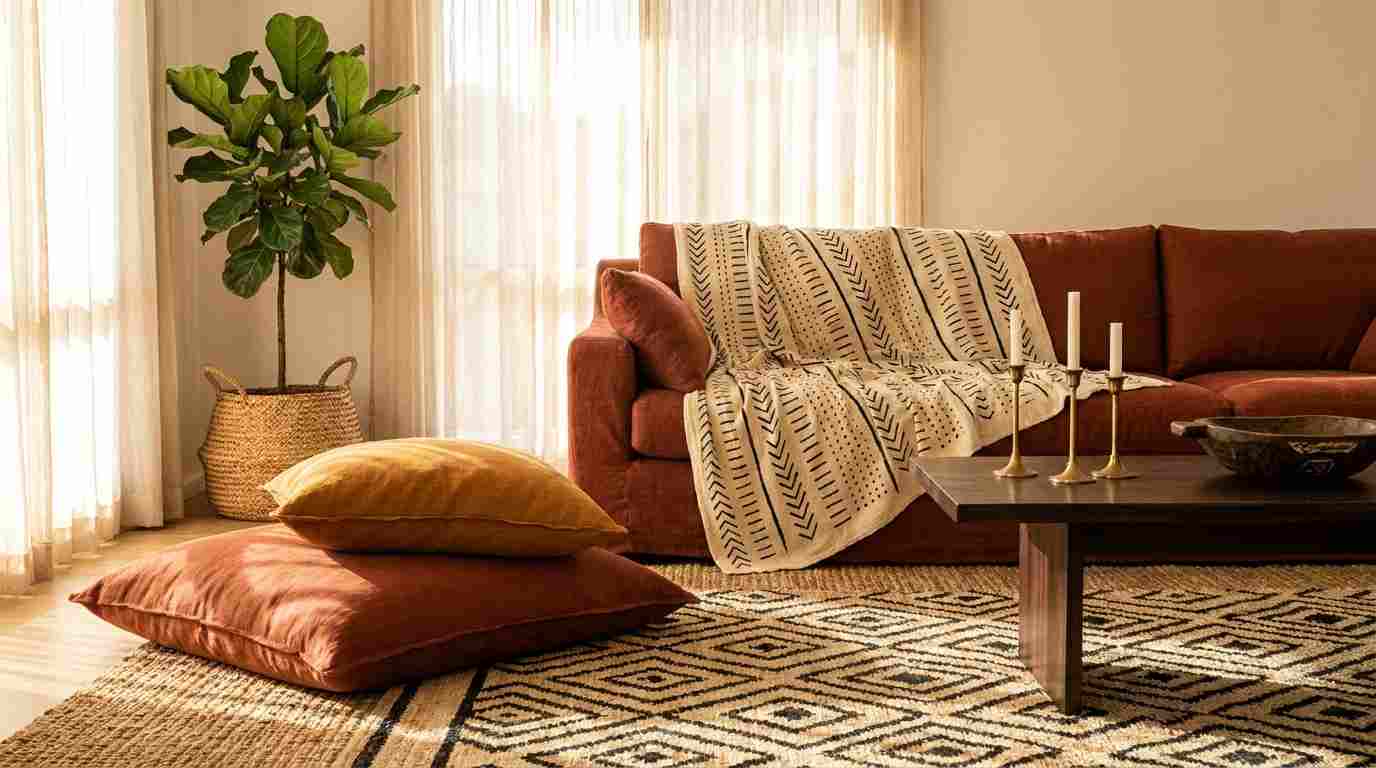
Afrohemian Home Decor Ideas for Your Living Room
Discover the best afrohemian home decor ideas for your living room — African textiles, boho layers, earthy tones, and how to mix them without visual chaos.
Afrohemian Home Decor Ideas for Your Living Room
Afrohemian style sits at the intersection of African heritage and bohemian layering and the living room is where it makes the biggest visual statement. It’s a specific aesthetic: warm earthy tones, handcrafted textiles, bold pattern mixing, and natural materials that feel collected rather than coordinated. This guide breaks down exactly how to build that look without the space feeling chaotic or like a costume.
What “Afrohemian” Actually Means (And Why It’s Different From Generic Boho)
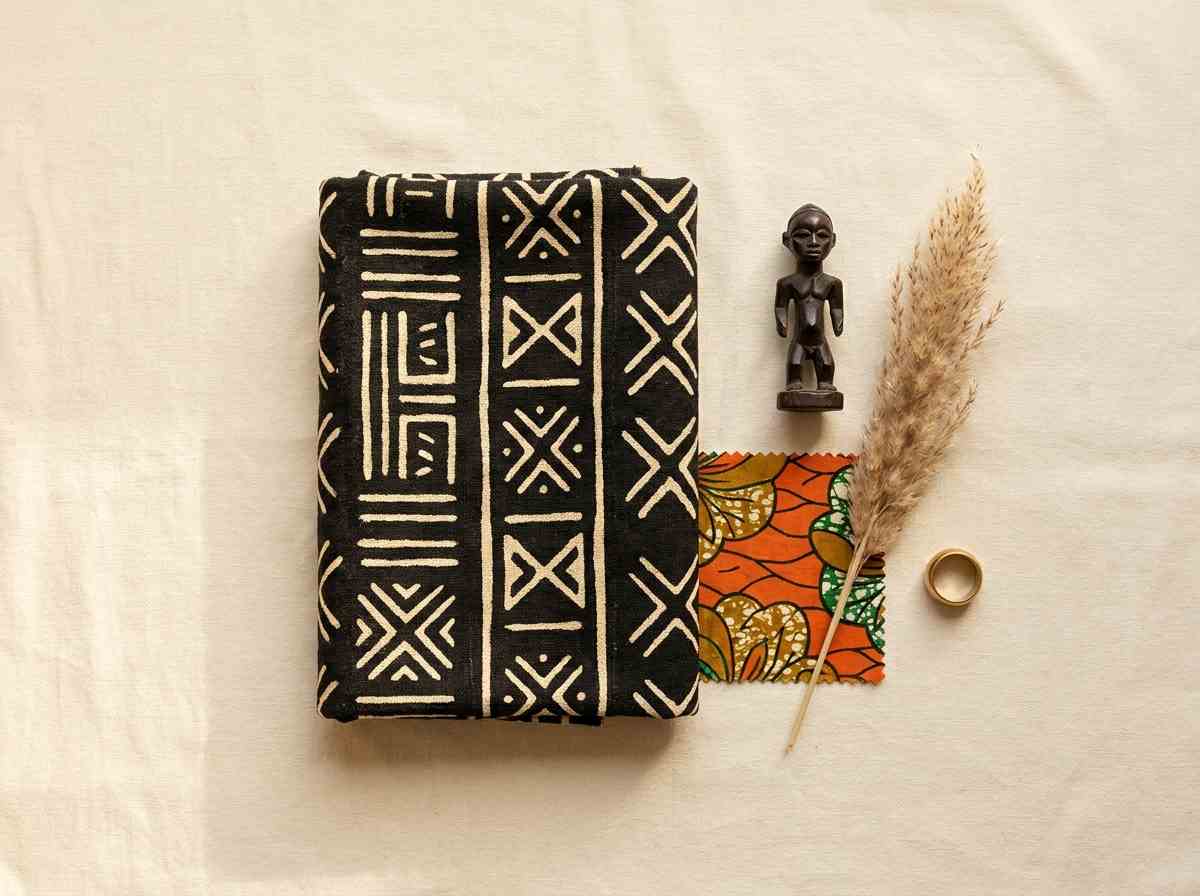
Standard bohemian decor pulls from a wide, often vague global mix — a little Moroccan here, some macramé there, rattan everywhere. Afrohemian is more deliberate. It centers African design traditions — Kente cloth patterns, Mudcloth (bogolan) textiles, West African wooden carvings, Ankara prints and then layers boho elements around those anchors rather than treating them as accent pieces.
The difference shows up most clearly in what takes priority. In an afrohemian space, African-origin pieces are the focal points. Boho elements — layered rugs, trailing plants, warm candlelight, woven baskets — serve as the supporting texture. Getting this hierarchy right is what separates an afrohemian living room from a boho room that happens to have one African throw pillow on the couch.
The Core Elements of an Afrohemian Living Room
1. Textiles First
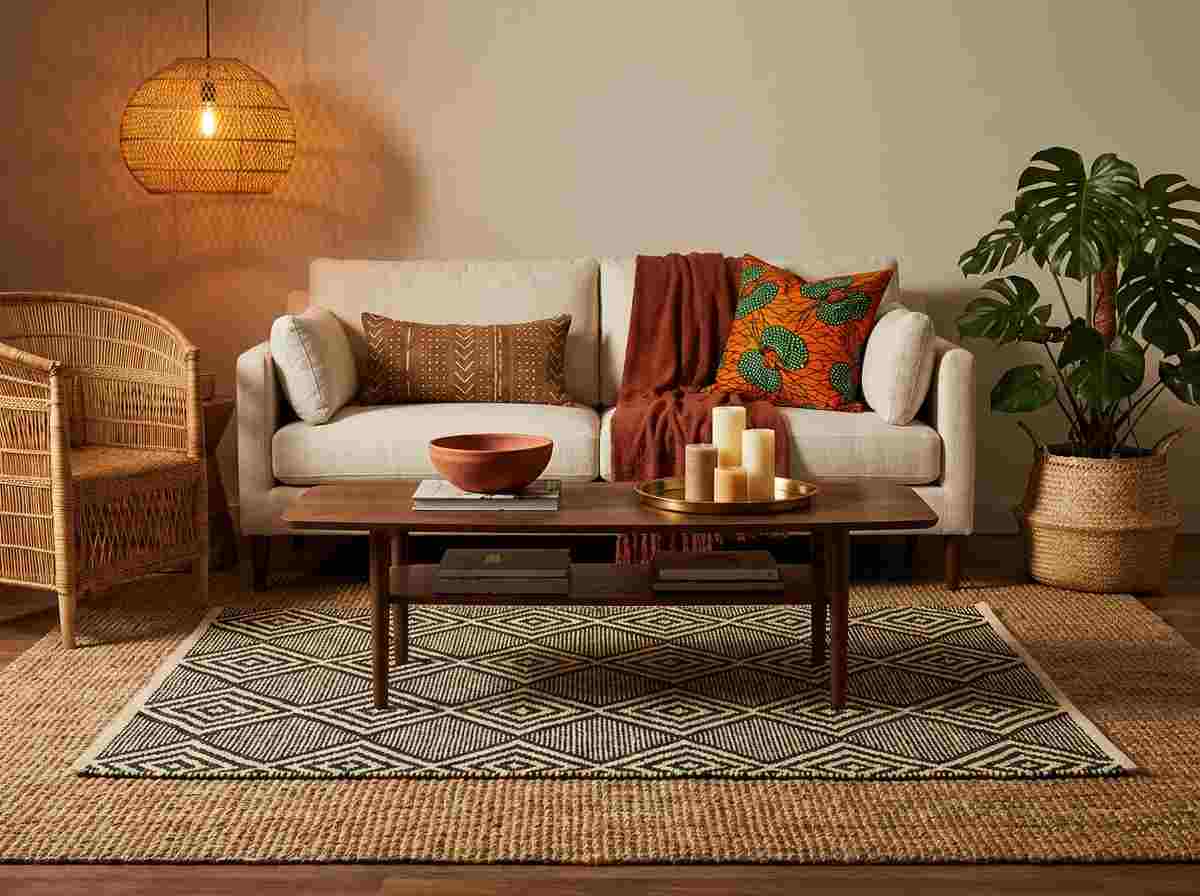
Textiles are the fastest way to establish the style and the easiest to layer over time. Mudcloth (the hand-dyed Malian cotton fabric with geometric symbols) works particularly well as a throw blanket or pillow cover because its muted cream-and-black palette anchors a room without overwhelming it. Kente-inspired patterns — bright gold, green, and red bands — work better as accent pillows or a single statement chair rather than across every surface.
A common approach: one mudcloth or bogolan-patterned anchor piece (throw or lumbar pillow), two or three solid-colored cushions in earthy tones pulled from that pattern (burnt sienna, olive, warm cream), and one Ankara-print pillow if you want a more saturated pop. The rule of thumb is that not every textile needs African origin — but the loudest pattern in the room should.
2. The Rug Situation
Afrohemian living rooms almost always involve layered rugs, but the layering has logic. Start with a natural fiber base — jute or sisal — in a neutral tone. Layer a smaller, pattern-rich rug on top: a Moroccan Beni Ourain-style rug (black geometric lines on cream) reads well in this aesthetic because it bridges North African and boho sensibilities. The key measurement: the smaller top rug should leave 8–12 inches of the base rug visible on all sides, or it just looks like you couldn’t afford one large rug.
Avoid placing two bold-pattern rugs on top of each other. One pattern, one neutral. Every time.
You May Like: Dark Academia Home Office Ideas: How to Build a Moody Study Nook on a Budget
3. Earthy Color Palette With Intentional Pops
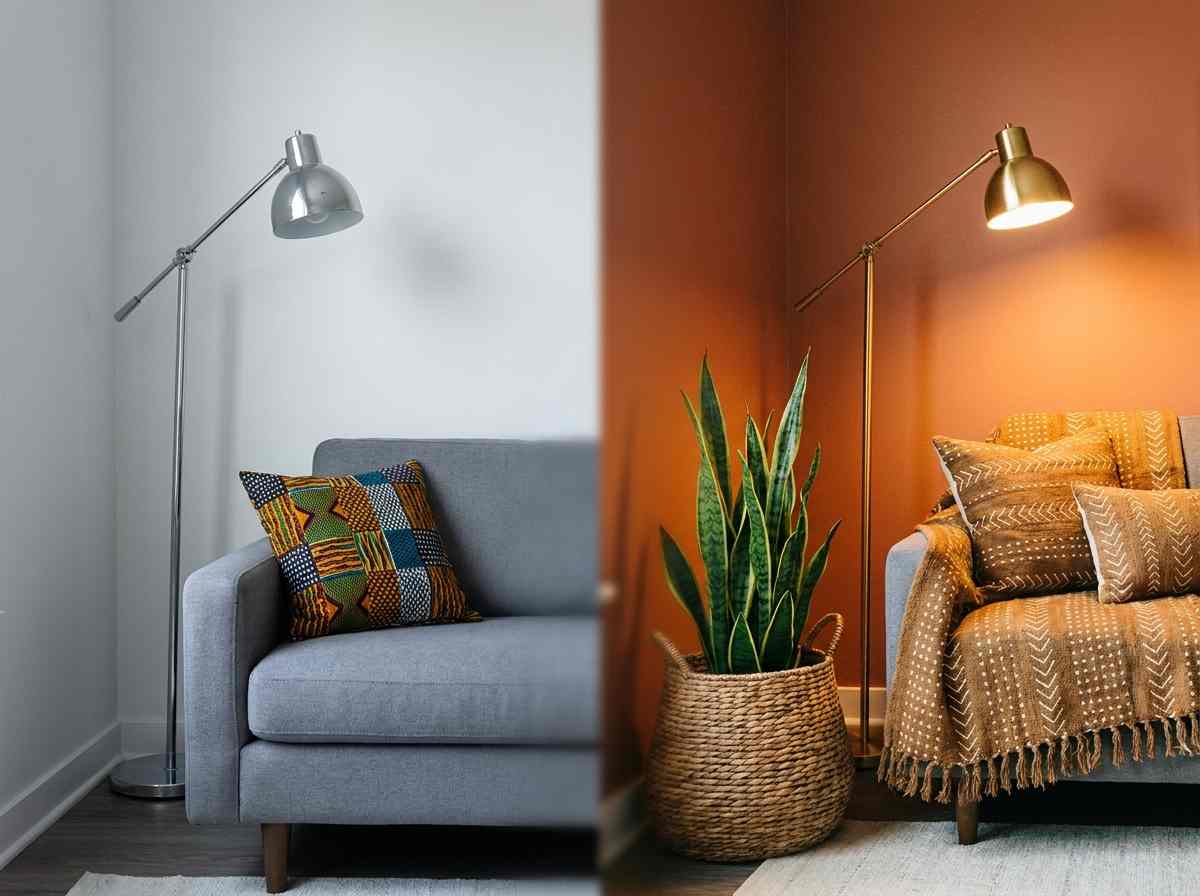
The base palette for an afrohemian living room runs warm and natural: terracotta, ochre, warm brown, deep olive, caramel, and creamy off-white. These aren’t the same as mainstream “earthy neutral” palettes — the warm undertone is essential. Cool grays and blueish whites flatten the look.
Color pops come from African textile accents: deep burgundy from a Kente stripe, bright Ankara print in orange and green, or cobalt blue pottery. These pops work because they’re warm-based or jewel-toned rather than pastel. A mint green pillow, no matter how “bohemian” it feels, reads wrong in this context.
4. Natural Materials and What to Choose
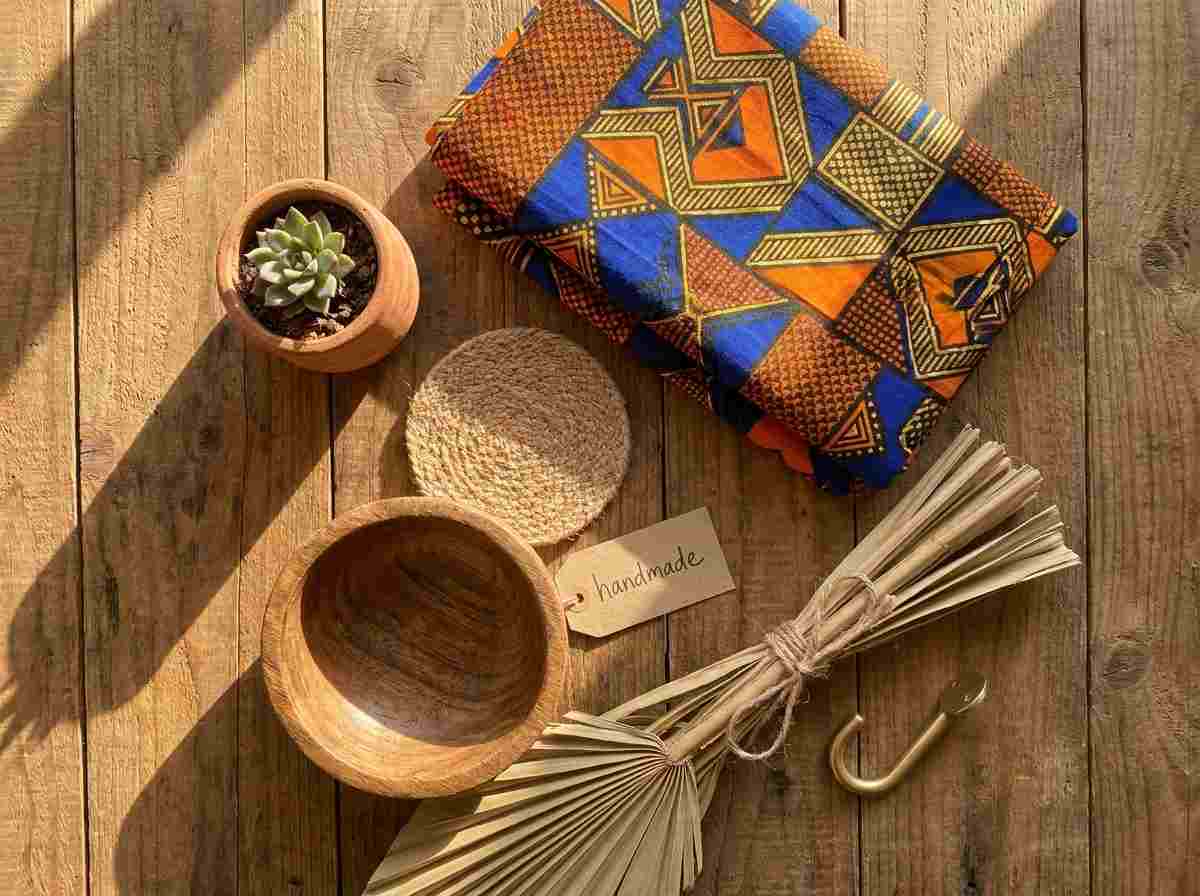
Wood, rattan, jute, clay, and hand-thrown ceramics are the material vocabulary here. Specifically: dark-stained acacia wood side tables, hand-carved wooden bowls as display pieces, woven grass baskets (both functional and decorative), and terracotta pots for plants all fit the brief. Metal accents, when used, should be matte brass or bronze — never chrome or rose gold.
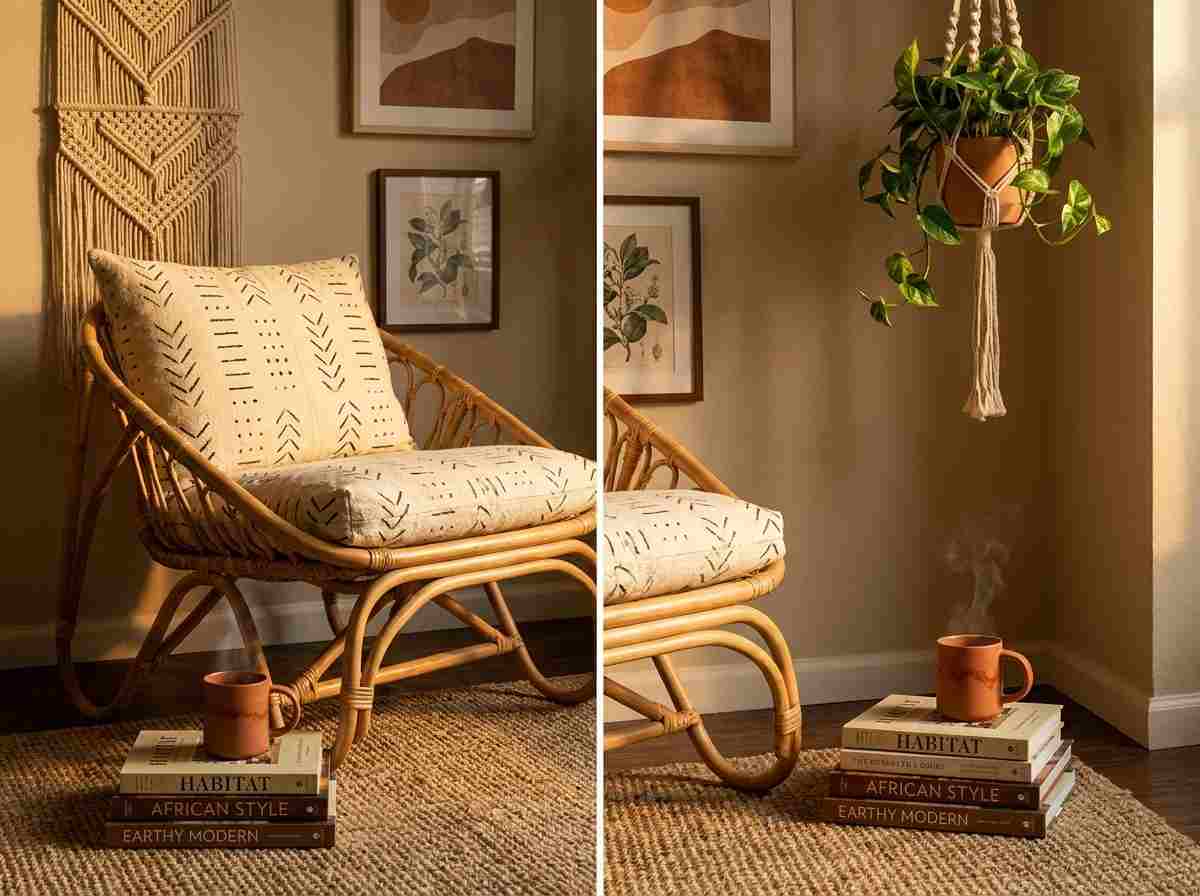
Rattan furniture (chairs, side tables, pendants) is acceptable here because it reads globally natural rather than specifically Western. Just avoid mass produced rattan pieces that look too uniform — slightly imperfect weaving is actually a selling point.
5. Wall Treatments and Art
Bare white walls are the enemy of this aesthetic. Options that work:
- Gallery wall with African-origin art: masks, kanga fabric stretched over frames, botanical prints with an earthy palette, abstract art by African artists or in an African-influenced style.
- Textile wall hangings: a single large mudcloth panel, a woven tapestry, or a piece of Kente fabric mounted on a dowel rod.
- Warm-toned paint: if repainting is an option, terracotta, warm camel, or deep forest green as an accent wall changes the entire room’s energy.
- Macramé used sparingly: one piece, not three. In an afrohemian room, macramé is a boho support element, not a focal point.
6. Plants and the Right Way to Display Them
Plants are non-negotiable in this aesthetic — they add the organic, living quality that ties boho and African nature-reverence together. The plants themselves matter less than the vessels: terracotta pots, woven baskets used as pot covers, hand-thrown ceramic glazed in earthy tones. A snake plant in a plain white nursery pot sitting in the corner of an otherwise well-styled room is a missed opportunity.
Larger plants (fiddle leaf fig, monstera, tall snake plant) work well in basket planters on the floor. Trailing plants (pothos, string of pearls) on shelves or hanging from macramé hangers add vertical layering. A mix of heights — floor, tabletop, hanging —creates depth.
Building the Look on a Budget
The most expensive-looking afrohemian rooms are often assembled over time from thrift stores, local markets, and small independent sellers rather than bought all at once from a single retailer. Specific things worth hunting for secondhand: wooden carvings and bowls, rattan furniture, terracotta pots, and woven baskets. Textiles — particularly Ankara fabric — can be purchased by the yard at African fabric stores and either sewn into pillow covers yourself or simply draped.
Online marketplaces that focus on handmade and African-made goods often have authentic
mudcloth and kente pieces at accessible prices, though shipping can add cost. Compare
before buying from home decor retailers that sell licensed prints of these patterns —
the quality gap is significant and the original makers deserve the sale.
Common Mistakes (What People Get Wrong)
Treating African pieces as “exotic accents” in a otherwise generic room. The single biggest mistake: buying one African-print throw pillow and calling it done. It reads more as appropriation-lite than as a coherent aesthetic. Afrohemian requires critical mass — textiles, art, and objects together, not one lonely token piece.
Mixing too many bold patterns at the same scale. Kente, Ankara, and mudcloth can all live in the same room, but they need different scales. One large-scale pattern, one medium, one small or solid. When everything is bold at the same visual weight, the eye has nowhere to land.
Using cool-toned “neutrals.” Gray linen sofas, cool-white walls, silver hardware — these kill the afrohemian vibe immediately because the entire palette is warm-based. Even if other elements are right, cool neutrals read as mismatched.
Rattan everything. Rattan is appropriate here, but when the sofa frame, side table, pendant light, mirror, and plant stand are all rattan, the room looks like a beach resort, not an afrohemian space. Use it selectively.
Neglecting lighting. Overhead fluorescent or cool-toned LED lights flatten warm terracotta tones into something muddy. Warm-toned bulbs (2700K–3000K), floor lamps with woven shades, and candles are what make the palette sing.
Going too dark too fast. Deep terracotta walls, dark wood, dark textiles — all good individually, but stacking too many dark elements in a small living room closes the space down. The cream and warm off-white in mudcloth textiles and natural fiber rugs exist precisely to keep things from feeling heavy.
You May Like: 15 Removable Wallpaper Ideas That Won’t Cost You Your Deposit (2026 Guide)
FAQ
What is afrohemian decor?
Afrohemian decor blends African design traditions — including mudcloth textiles, Kente patterns, wooden carvings, and earthy handcraft — with bohemian layering principles like mixed rugs, trailing plants, and natural materials. It’s distinct from generic boho in that African-origin pieces take the leading visual role rather than serving as accents.
What colors work best in an afrohemian living room?
The core palette is warm and earthy: terracotta, ochre, caramel, burnt sienna, deep olive, and creamy off-white. Jewel-tone pops — deep burgundy, forest green, cobalt — come in through textiles and pottery. Avoid cool neutrals like gray, slate, or icy white; they clash with the warm base.
How do I mix African and boho patterns without it looking chaotic?
Scale is the key. Place one large-scale bold pattern (a mudcloth throw or Ankara-print pillow) as the anchor, then bring in medium and small patterns at lower contrast. Vary textures — woven, smooth, rough — across surfaces so the layers read as intentional rather than cluttered.
Can I do afrohemian decor in a small apartment living room?
Yes — the style actually compresses well. Prioritize vertical layering (wall hangings, hanging plants) and keep large furniture pieces in neutral earthy tones. Save the bold textile patterns for smaller, movable elements like pillows and throws, and keep at least one clean sightline through the room so it doesn’t feel packed.
Closing
Afrohemian style rewards slow, intentional collecting over rapid room makeovers. Start with the textiles and lighting — those two elements will do more to establish the atmosphere than any furniture piece. Add objects that have real origin and craft behind them when you find them, and the room will build character over time rather than looking like it was assembled in a single weekend shopping trip. That accumulated, layered quality is exactly what makes this aesthetic work.