Small Apartment Decorating Ideas on a Budget
Tight on space and cash? 14 real small apartment decorating ideas on a budget that actually create room — not just clever photos.
Small Apartment Decorating Ideas on a Budget: 14 Tricks That Actually Make Space
Most “small space” advice tells you to buy a $300 storage bed and call it solved. That’s not budget decorating, and it doesn’t actually fix the problem most renters have: a apartment that looks cluttered and feels smaller than its square footage. The tricks below cost little to nothing and work by changing how the eye reads the room, not just by adding more containers to hide things in.
Why Small Spaces Feel Smaller Than They Are
A cramped feeling usually has nothing to do with actual square footage. It comes from visual noise — too many colors competing for attention, furniture blocking sightlines, and clutter sitting at eye level where you can’t avoid seeing it. Two apartments with identical floor plans can feel completely different sizes depending on what’s blocking the walking path and how much the eye has to process in one glance. That’s good news, because it means the fix is mostly about subtraction and arrangement, not about buying more stuff.
1. Pick One Light, Neutral Wall Color (or Fake It With Peel-and-Stick)
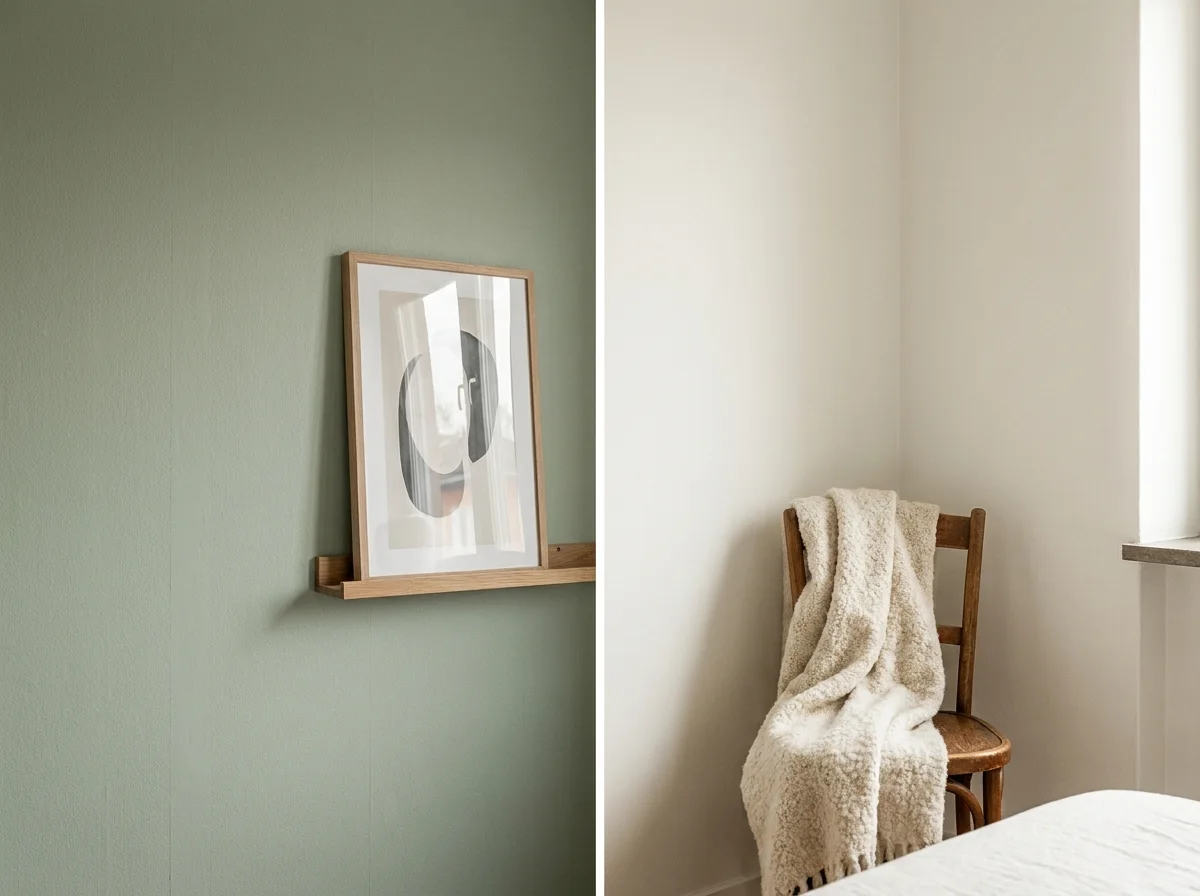
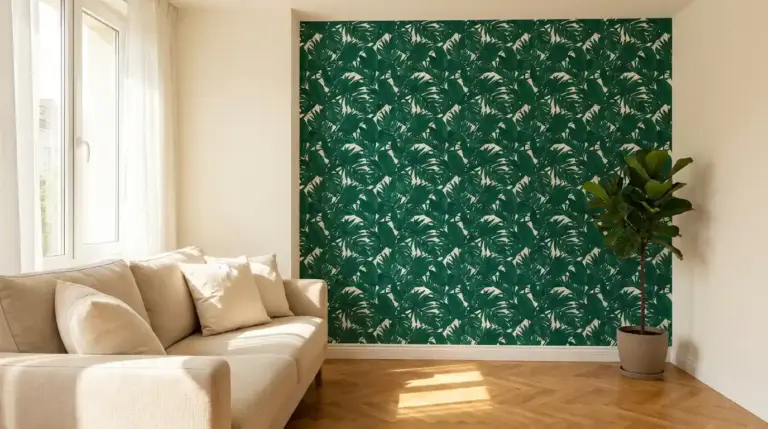
Dark, saturated walls absorb light and visually pull the walls inward. Light, slightly warm neutrals — soft white, light greige, pale sage — bounce light around and push the perceived boundary of the room outward. If painting isn’t allowed, peel-and-stick wallpaper in a light tone does the same job and comes off clean at move-out. Stick to one wall color throughout adjoining rooms if your layout is open; color changes at a doorway create a visual stop sign that makes the space feel chopped up.
2. Hang Curtains Higher and Wider Than the Window
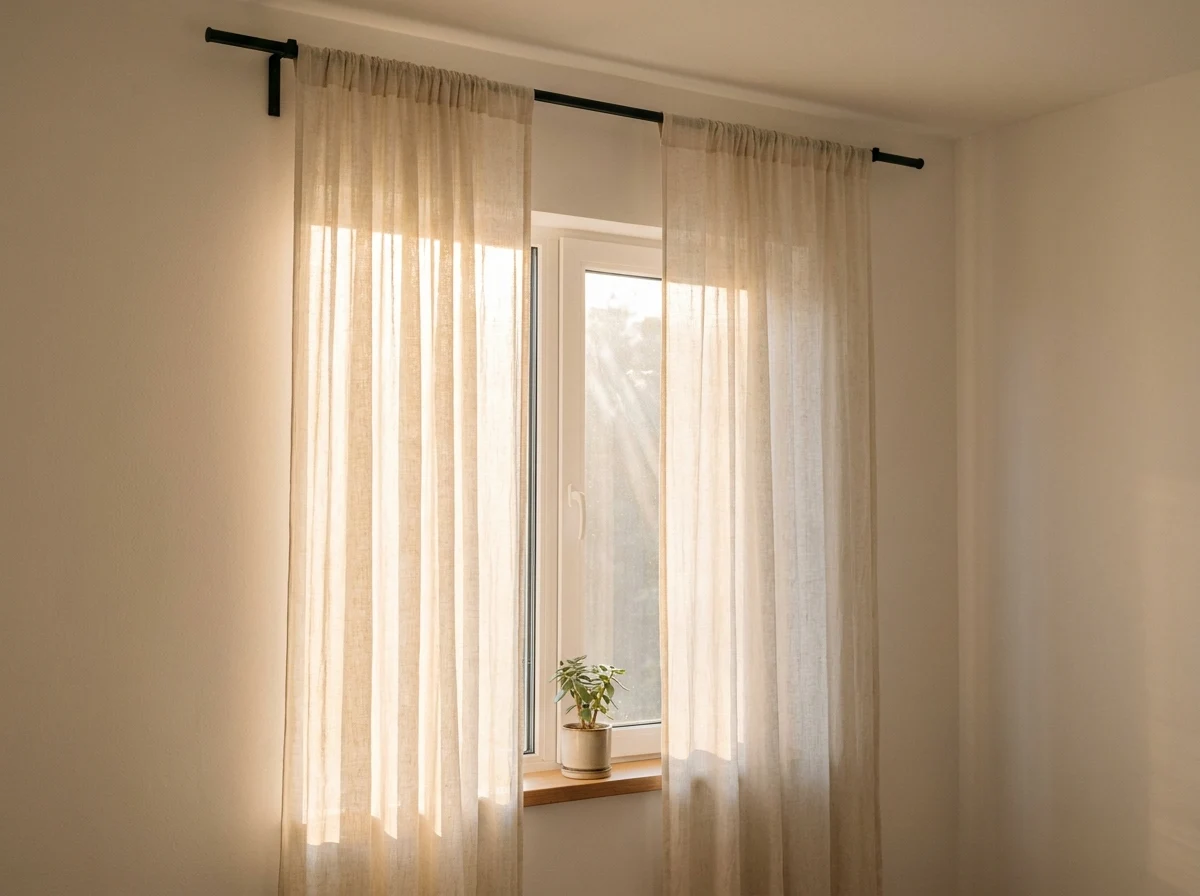
This is the single highest-impact, lowest-cost trick on this list. Mount the curtain rod 4–6 inches above the window frame and extend it 6–10 inches past each side, so the curtains frame the window rather than sit inside it. When the curtains are pulled open, they cover wall instead of window, which tricks the eye into reading the window — and the ceiling — as taller than they are. A $15 tension rod and a pair of light-colored curtains will outperform almost any furniture purchase for the price.
3. Use Vertical Storage Instead of Floor Storage
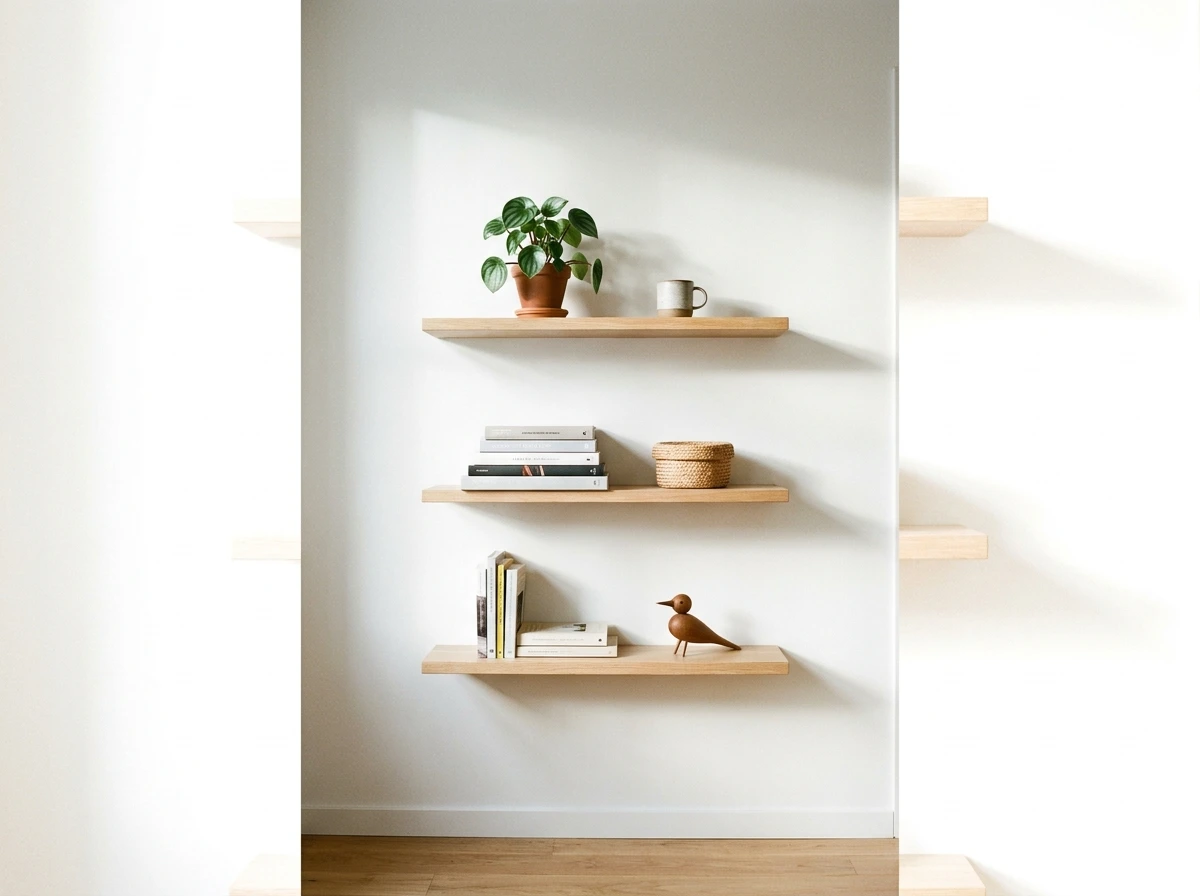
Floor space is the scarcest resource in a small apartment, and most of the wall above eye level sits empty. Floating shelves, wall-mounted hooks, and over-the-door organizers move storage off the floor and onto walls that were doing nothing. The goal isn’t to add more shelves than you need — it’s to relocate things that currently sit on the floor (shoes, bags, baskets) up onto the wall, which immediately opens the visible floor area and makes the room read as bigger.
4. Choose Furniture With Visible Legs
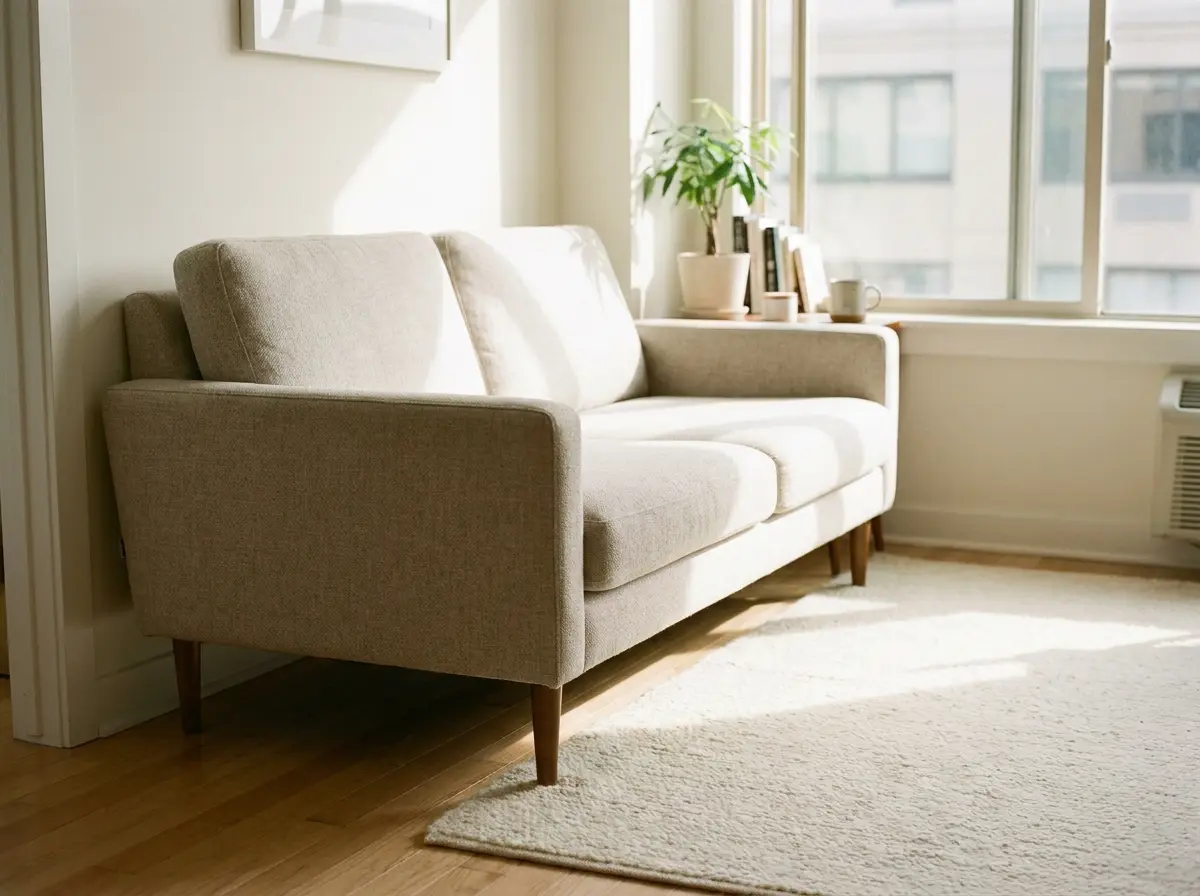
A sofa or chair that sits flush to the floor blocks the sightline and reads as a heavier, larger object. The same piece on slim, visible legs lets light and floor pass underneath it, which the eye registers as open space even though the furniture’s footprint hasn’t changed. When shopping secondhand or budget furniture, this single detail matters more than the size of the piece itself.
5. Mirror Placement That Actually Doubles Light
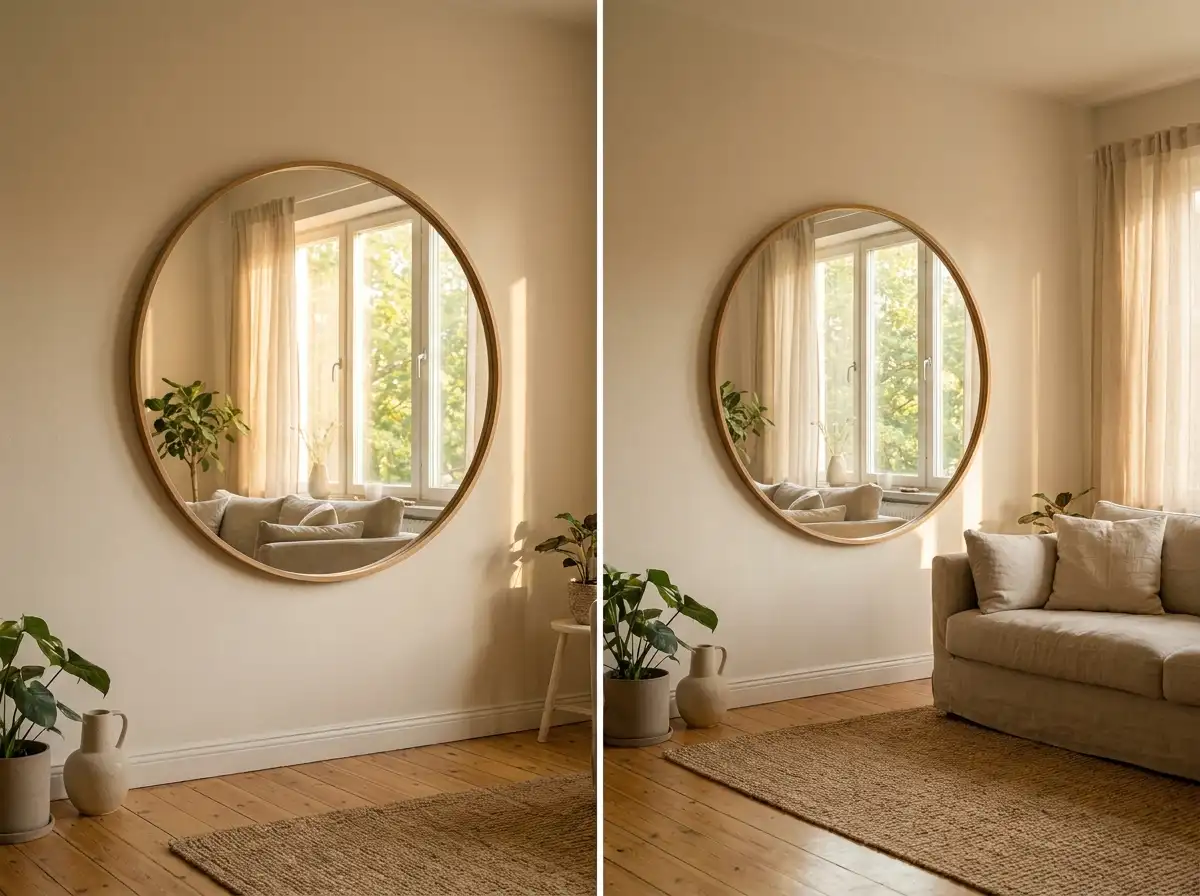
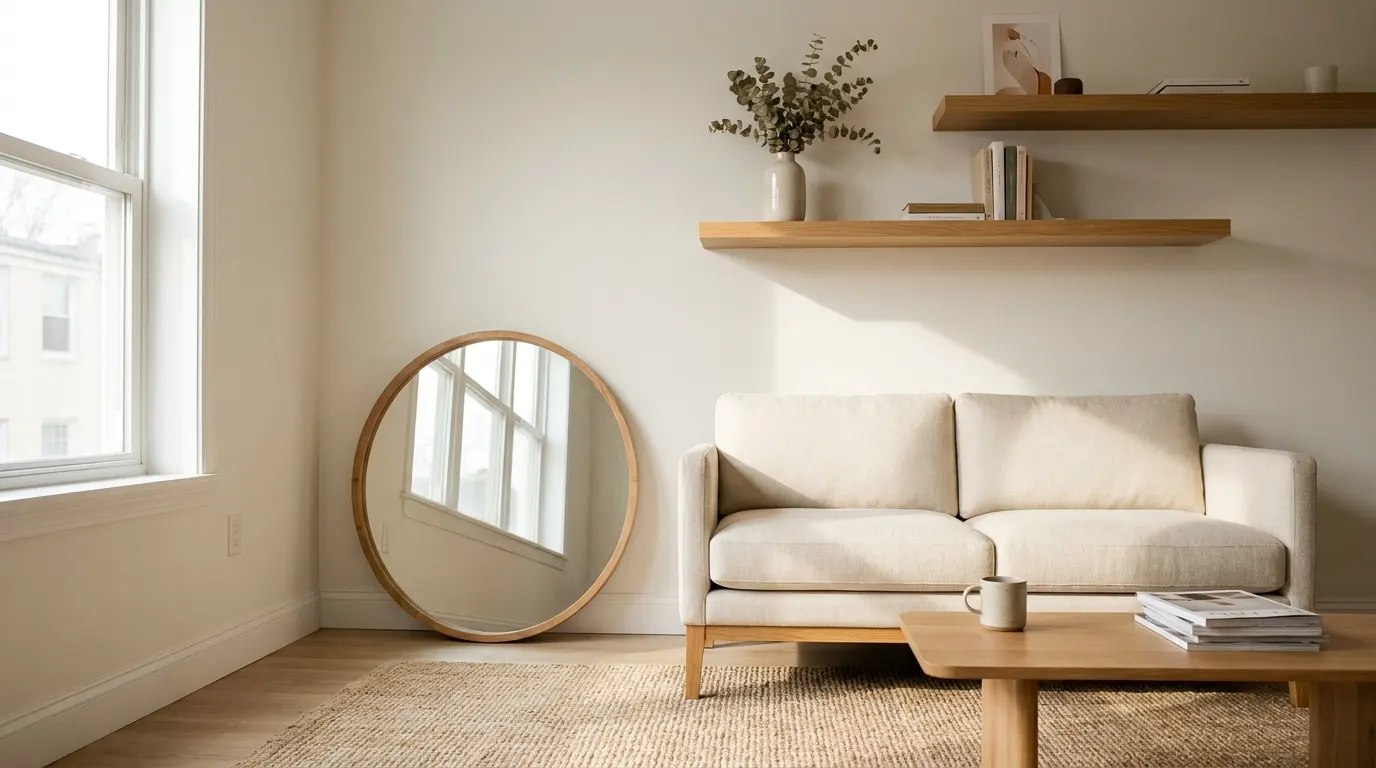
A mirror only makes a room feel bigger if it reflects something worth doubling — a window, a light source, or an open sightline. A mirror facing a blank wall does very little. Hang the largest mirror you can afford directly across from your main window or light fixture, and the reflected light will visibly brighten and stretch the room. Leaning a large mirror against a wall (rather than hanging it) also adds height to a room with low visual interest at the top.
6. Float Furniture Off the Walls — Selectively
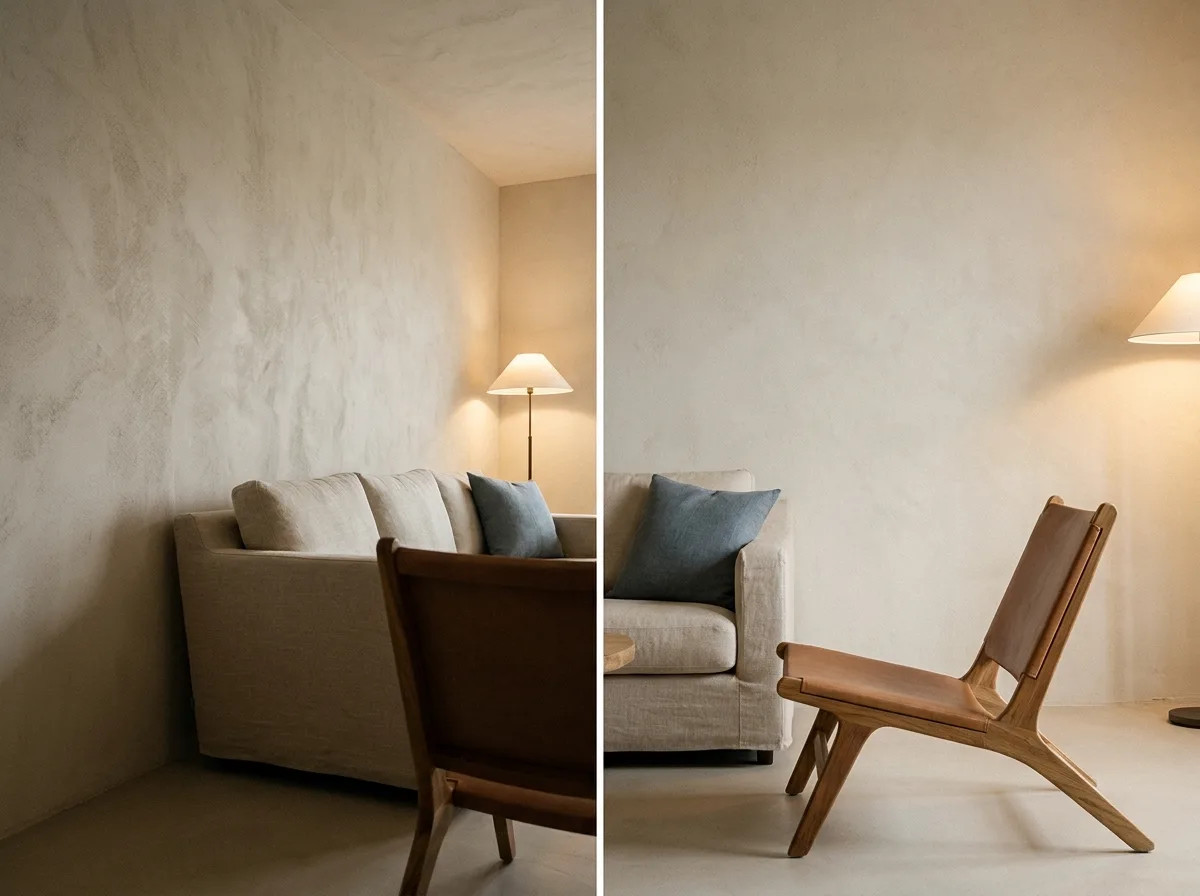
The instinct in a small room is to push every piece of furniture against the wall to “save space.” This often backfires, because it creates one dense, heavy edge and leaves the center of the room feeling like an empty, awkward void. Pulling a sofa or bed even 4–6 inches off the wall, or angling a chair slightly, creates breathing room and a sense of layered depth instead of a flat perimeter of furniture.
7. Use a Rug to Define — Not Shrink — the Space
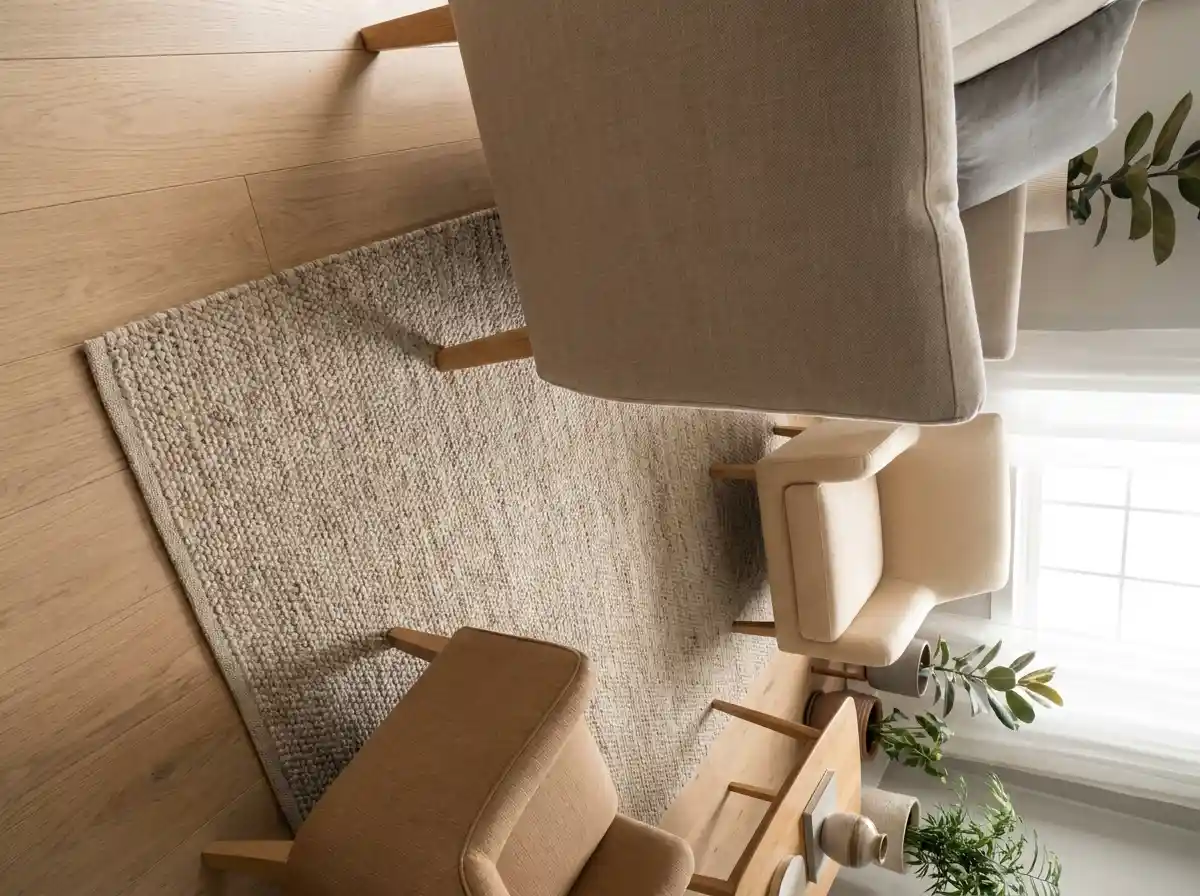
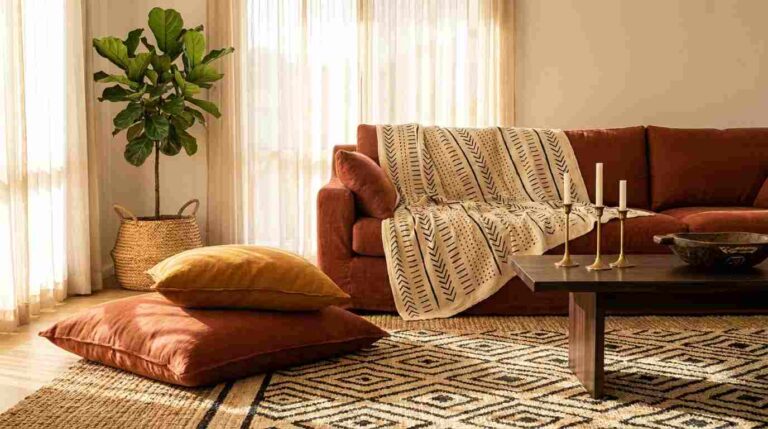
A rug that’s too small for the seating area is one of the most common small-space mistakes, and it makes a room look smaller, not bigger, because it visually chops the floor into disconnected zones. The front legs of major furniture pieces (sofa, bed, chairs) should sit on the rug, not floating off the edge of it. If a large rug isn’t in the budget, two smaller rugs of the same color and texture, placed to read as one zone, work better than one undersized rug centered awkwardly in the room.
8. Multi-Use Furniture, Chosen for the Right Reason
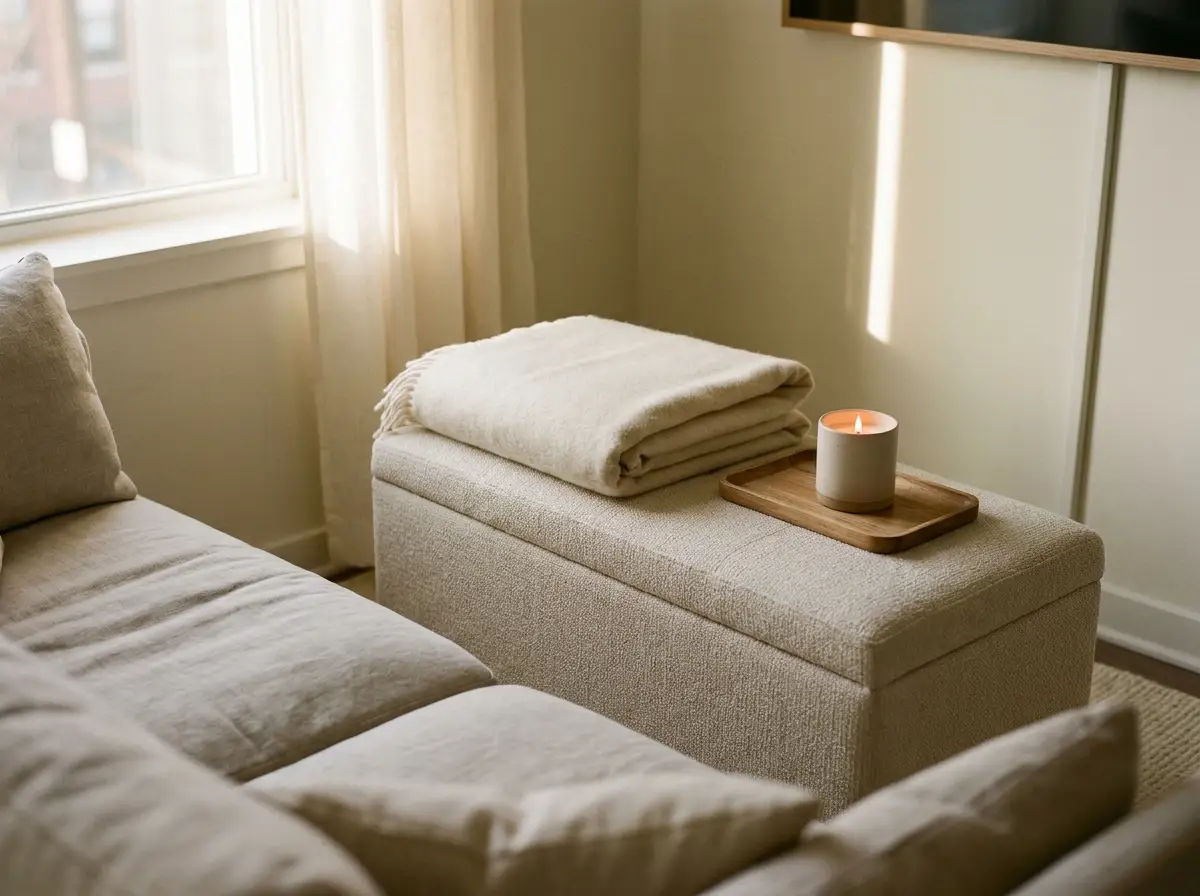
Storage ottomans, fold-down desks, and daybeds get recommended constantly, but the real value isn’t the storage cubby — it’s that one piece of furniture is doing two jobs in a space that doesn’t have room for two separate pieces. Before buying anything labeled “space-saving,” ask whether it’s actually replacing a second piece of furniture you’d otherwise need, or whether it’s just storage furniture with a higher price tag.
9. Keep Sightlines Clear From the Entrance
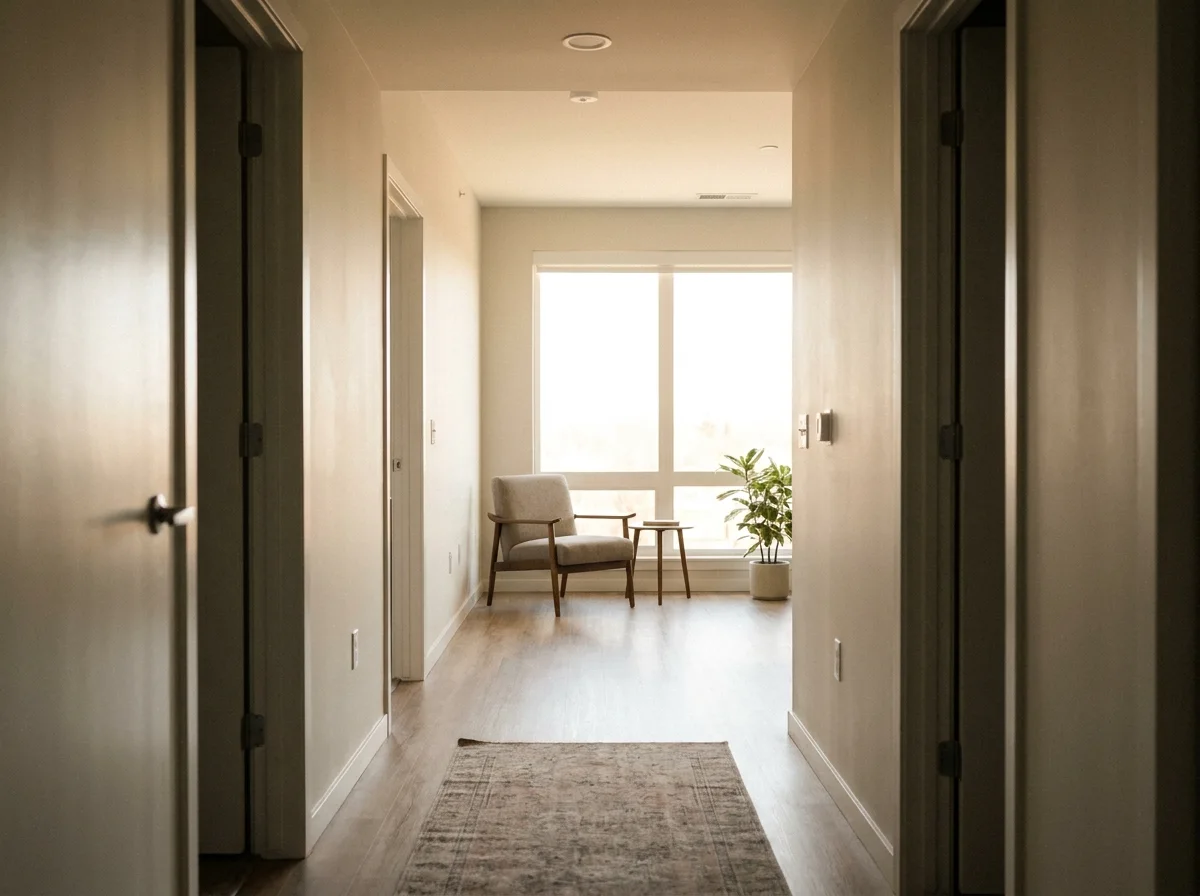
Stand at your front door and look across the apartment. Whatever is directly in that sightline sets the tone for how the entire space feels, because it’s the first thing registered every time you walk in. A tall bookshelf or stack of boxes blocking that view reads as clutter even if the rest of the room is tidy. Rearranging furniture so the entrance sightline leads toward a window, a clear wall, or open floor — rather than the back of a couch or a storage pile — has an outsized effect on how big the apartment feels.
10. Layer Lighting Instead of Relying on One Overhead Fixture
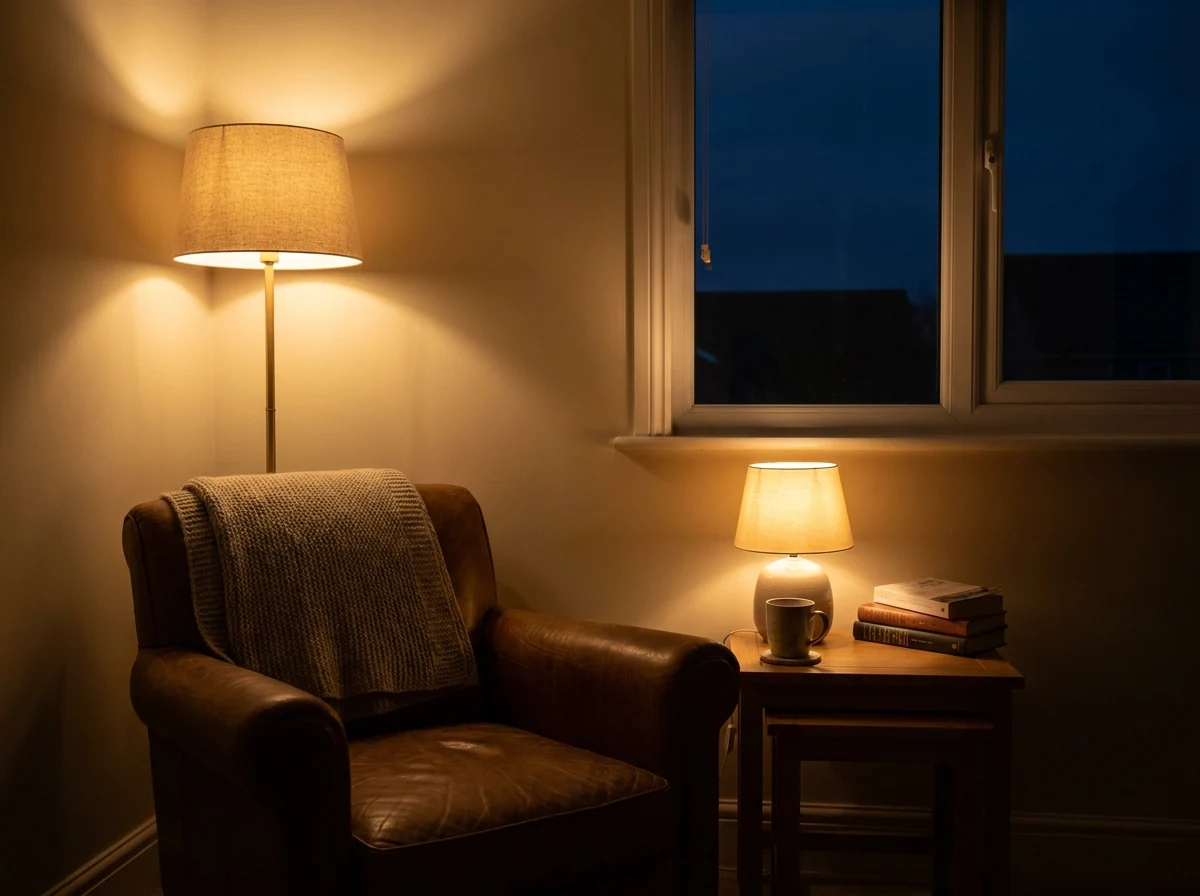
A single overhead light creates flat, even lighting that flattens the whole room into one visual plane, which reads as small and boxy. Adding even one or two secondary light sources — a floor lamp in a corner, a clip light over a reading chair — creates pools of brighter and dimmer light that give the room a sense of depth and zones, the same way a larger space naturally has variation in light.
11. Use Fewer, Slightly Larger Decor Pieces
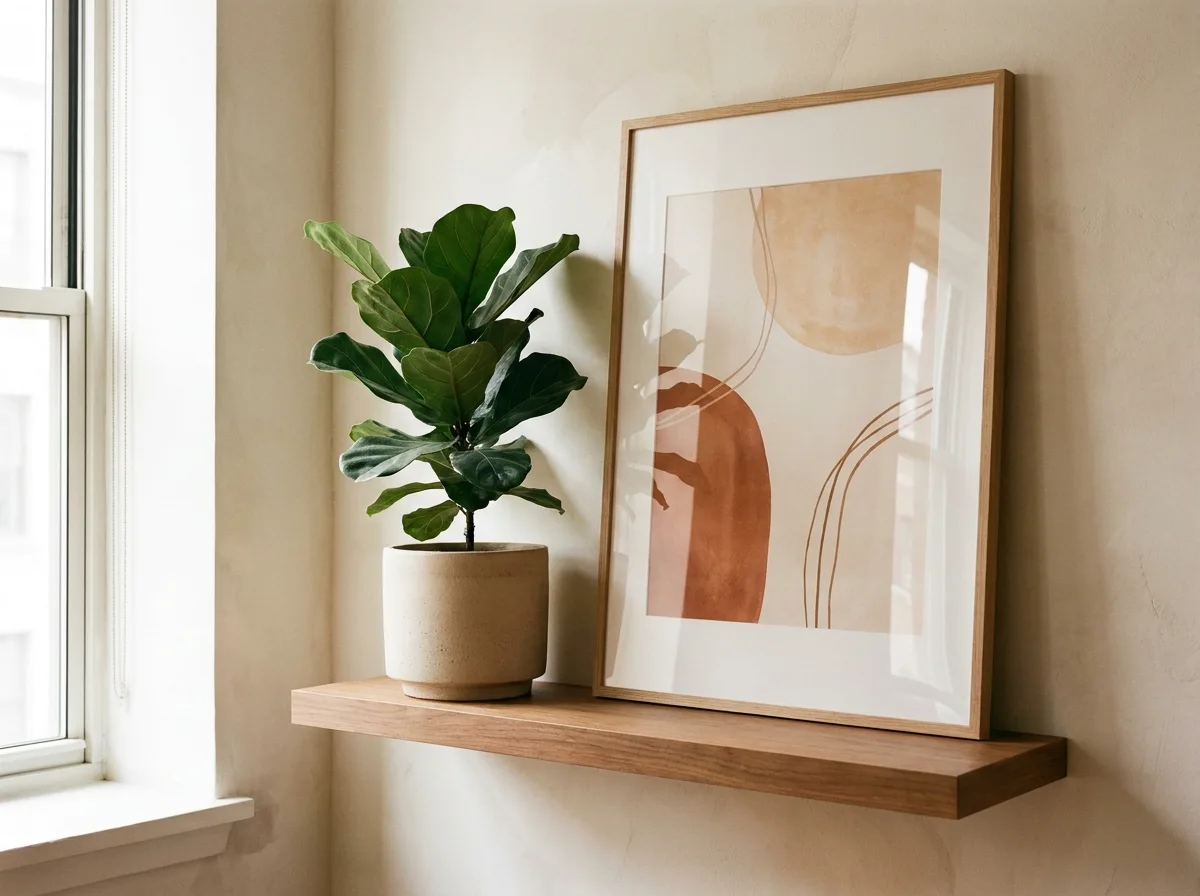
Filling shelves with many small trinkets creates visual clutter that the eye has to process individually, which reads as busy and cramped. A few larger, more intentional pieces — one substantial plant instead of five small ones, one large piece of art instead of a gallery wall of small frames — give the eye fewer things to process and create a calmer, larger-feeling room. This is counterintuitive in a small space, where the instinct is to go small with everything.
12. Keep Cords and Cables Out of Sight
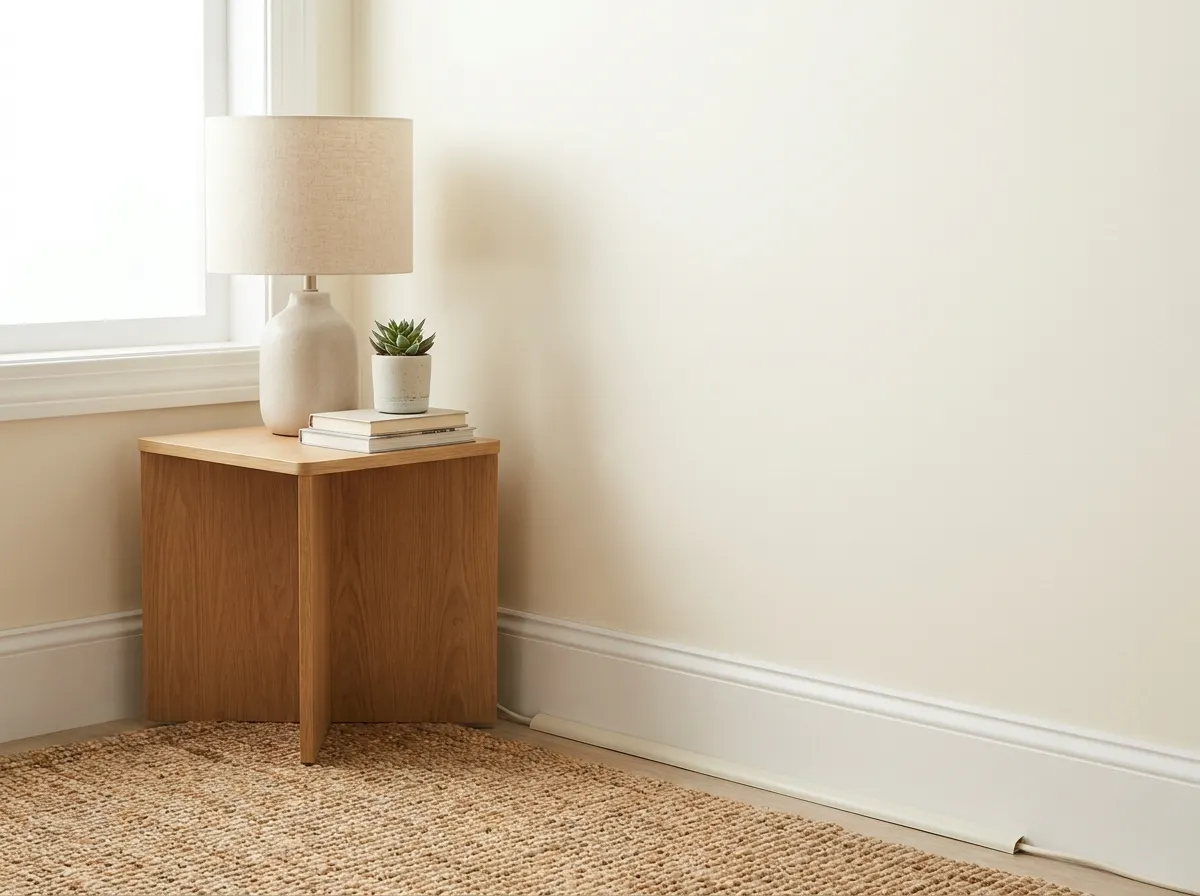
Visible cords are a small detail that disproportionately reads as “messy” because they create chaotic, irregular lines the eye keeps tripping over. Cable clips, a cord cover along the baseboard, or simply routing cords behind furniture rather than across open floor removes a surprising amount of visual clutter for almost no money.
13. Match Hardware and Hangers for a Cleaner Look
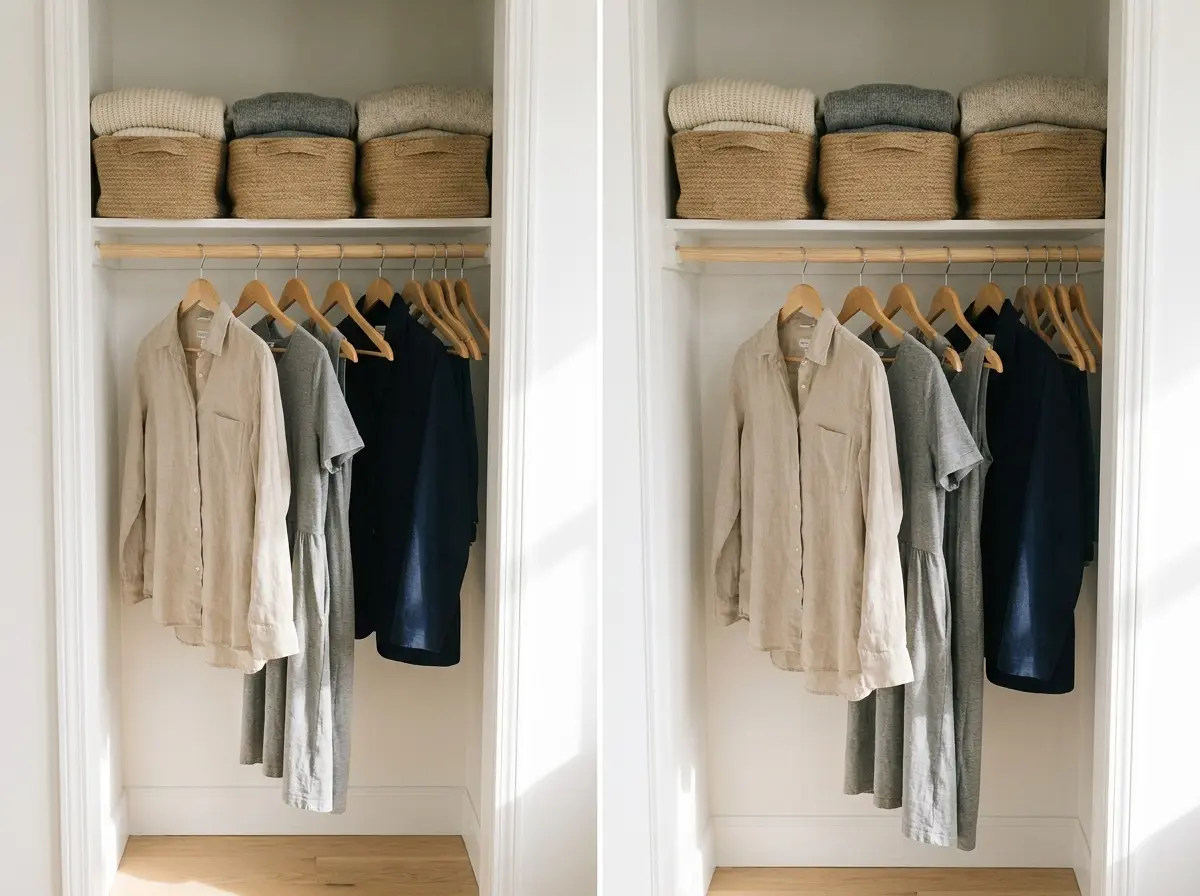
In a small closet or open shelving area, mismatched hangers and storage containers in different colors and materials create visual noise even when everything is technically organized. Switching to one style of hanger or one set of matching bins doesn’t add storage capacity, but it makes existing storage look intentional rather than thrown together — which matters more in a small space where storage is often visible rather than tucked away.
14. Edit Before You Decorate
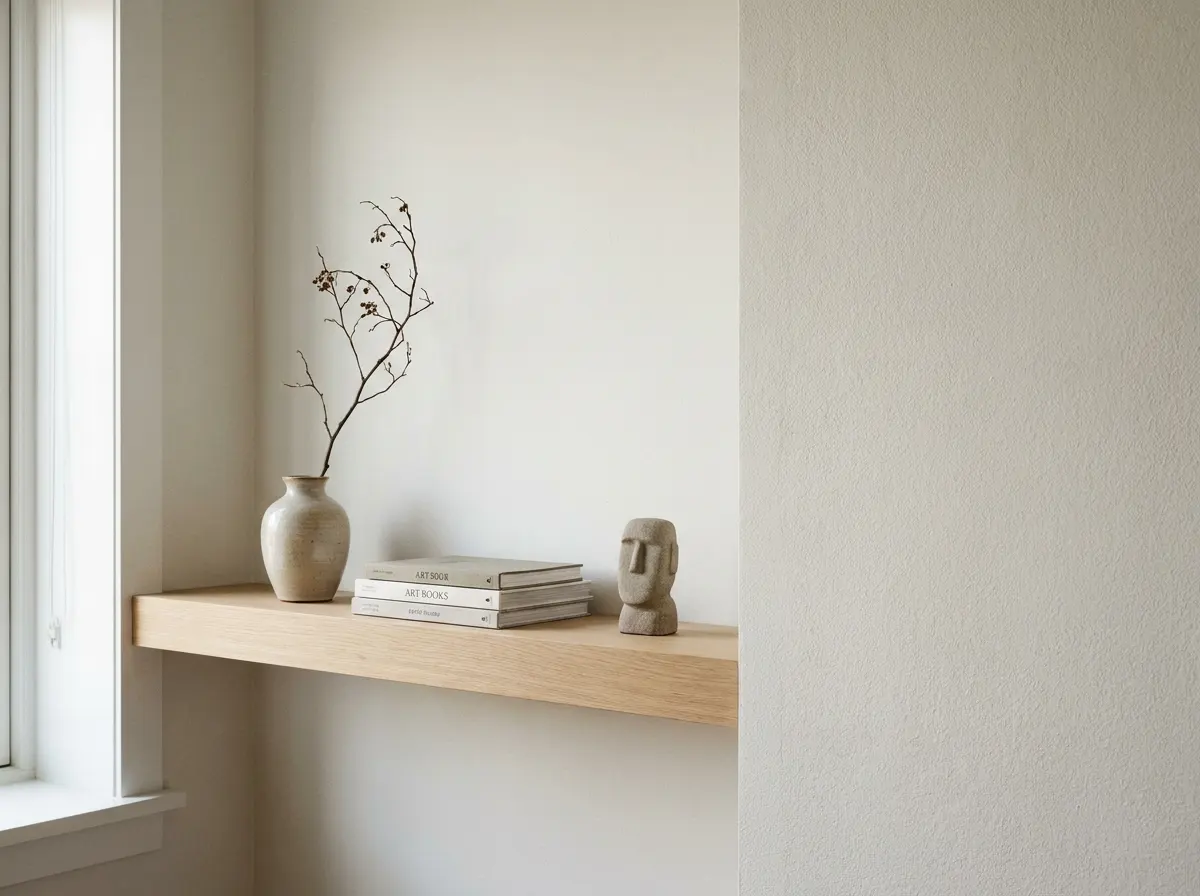
The cheapest and most effective small-space trick has nothing to do with buying anything: remove what isn’t being used. A small apartment can usually absorb fewer pieces of furniture and fewer decorative objects than it currently holds. Walking through and removing one redundant item from each surface — the extra throw pillow, the duplicate side table, the decorative object that’s just taking up space — often does more for how a room feels than any purchase on this list.
Common Mistakes People Make Decorating Small Spaces
Buying storage before decluttering. Storage bins and organizers get purchased to contain clutter, but if the clutter is mostly unused items, the bins just hide the problem instead of solving it — and now there’s less floor space too.
Choosing furniture that’s scaled for a showroom, not the room. A sofa that looks normal-sized in a furniture store can dominate a small living room, because showrooms are large open spaces that make furniture look smaller than it is. Measuring the actual room and the actual furniture dimensions before buying prevents this — eyeballing it in-store almost always underestimates scale.
Using too many small rugs instead of one larger one. As covered above, this chops the floor into fragments instead of unifying it, and it’s one of the most common mistakes in budget small-space decorating specifically because small rugs are cheaper, which makes them tempting.
Hanging art too low or too small for the wall. Art hung at “eye level for a tall person standing close” often ends up too low when viewed from across a small room, and undersized art on a large wall leaves awkward empty space around it that reads as unfinished rather than intentional.
Going monochrome by accident with no texture variation. An all-white or all-neutral room can look genuinely larger, but only if there’s texture variation — different fabrics, finishes, materials. A flat, single-texture neutral room can end up looking sterile and even smaller, because there’s nothing for the eye to register as depth.
Forgetting the ceiling. Small space advice focuses heavily on floors and walls and almost never mentions the ceiling, which is often the most neglected surface in a rental. A pendant light swap, a strip of peel-and-stick wallpaper on the ceiling, or simply painting it a shade lighter than the walls can meaningfully change how tall the room feels.
FAQ
What is the cheapest way to make a small apartment look bigger?
Hanging curtains higher and wider than the window frame is generally the lowest-cost, highest-impact change, often costing under $20 for a rod and a basic curtain set, and it requires no special tools or permission from a landlord.
Do mirrors actually make a small room look bigger?
Yes, but only when placed to reflect a window or light source — a mirror facing a blank wall adds little. Position matters more than size.
Should I use a small rug or no rug at all in a small living room?
A correctly sized rug, large enough that the front legs of the main furniture sit on it, makes a small room feel more unified. An undersized rug usually looks worse than no rug at all, because it visually fragments the floor.
Is dark paint ever okay in a small apartment?
Dark color can work on a single accent wall in a room with strong natural light, but as the dominant color across a small, low-light room, it tends to make the space feel more enclosed. Light, warm neutrals are the safer default for renters trying to maximize a budget’s visual impact.
The Real Takeaway
None of these tricks require a renovation budget. Most of them are rearrangement, a rod and curtains, or one well-placed mirror — the kind of changes you can do in an afternoon with what you already own or a small trip to a hardware store. Start with sightlines and curtain height before buying anything; those two changes alone shift how a room feels more than most furniture purchases do.