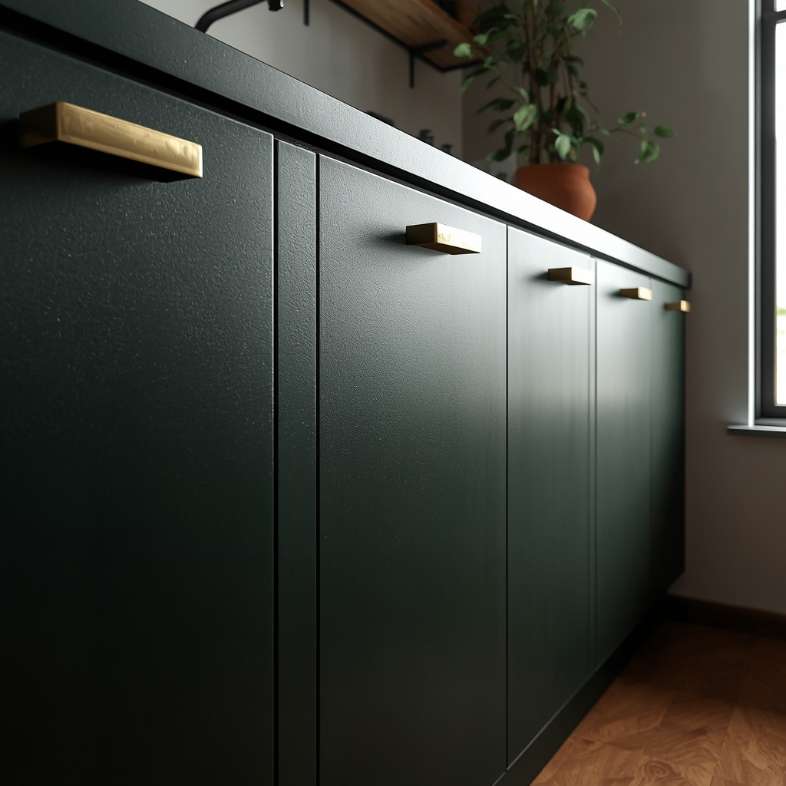
Dark Cottagecore Kitchen Ideas That Feel Like a Fairytale — 2026 Guide
There is a kitchen I keep coming back to in my imagination.
Stone floors worn smooth by a hundred years of use. Cabinets painted a deep, earthy forest green, their edges slightly softened from decades of hands opening and closing them. A wooden countertop that has absorbed a thousand meals — stained in the corners, warm in the middle, holding its history unapologetically. Copper pots hanging from a ceiling rack. A window above the sink with something growing on the sill — herbs, maybe, or a trailing vine with small dark leaves. The light comes in warm and low, filtered through the kind of curtains that are slightly too full for the window. A cast iron pot on the stove. The whole room smells like something is always simmering.
That kitchen does not belong to a real house. But it could.
The dark cottagecore kitchen aesthetic in 2026 is the design movement that is making that imaginary kitchen into something real, accessible, and genuinely achievable — whether you own your home or rent it, whether you have a renovation budget or twenty dollars and a weekend.
This guide covers everything: what the dark cottagecore kitchen actually is, the ten most important design elements that create it, a budget-by-budget breakdown of how to achieve the look, and every practical question you might have before you start.
Key Takeaways
- The dark cottagecore kitchen combines the warmth and botanical abundance of cottagecore with a deeper, moodier, more dramatic colour palette.
- Forest greens, deep navy, aged black, dark plum, and earthy brown are the foundational colours of the aesthetic.
- Natural materials — wood, stone, copper, cast iron, ceramic, and wicker — are essential to the authenticity of the look.
- The aesthetic works in any size kitchen, from a small studio galley to a large farmhouse space.
- Most dark cottagecore kitchen elements are achievable on a budget through thrifting, painting, and intentional styling.
- Plants, dried botanicals, and foraged elements are the living heart of the dark cottagecore kitchen.
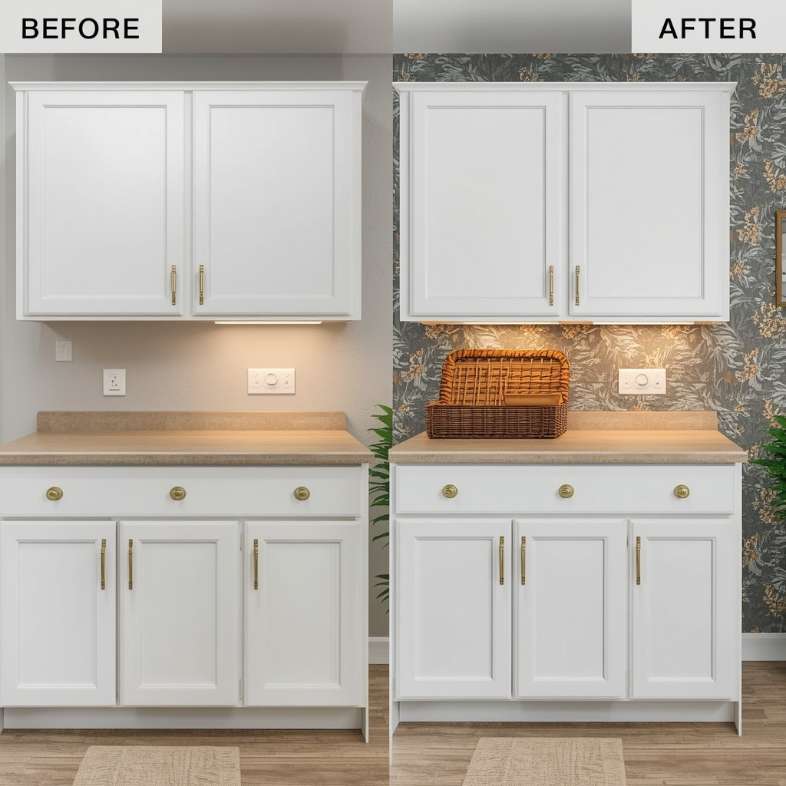
What Is a Dark Cottagecore Kitchen?
Cottagecore as an aesthetic has been building since the early 2020s — a romantic, nostalgic design direction rooted in rural living, natural materials, botanical abundance, and the kind of home that looks like it grew rather than was decorated. Floral prints. Linen curtains. Mason jars of preserves on a windowsill. Garden herbs in terracotta pots.
The dark cottagecore kitchen takes this foundation and deepens it. Literally.
Where standard cottagecore reaches for soft blush, warm cream, and faded sage, dark cottagecore reaches into the forest at dusk — for the deep, saturated, atmospheric colours that exist at the far end of the natural palette. Forest green. Midnight blue-green. Aged black. Dark plum. The colour of old timber. The colour of stone in a centuries-old building. The colour of the moss that grows on the north side of everything.
The result is a kitchen that feels like it belongs in a fairytale rather than a design catalogue. Not a light, airy fairy tale — the other kind. The kind where the house in the woods has smoke coming from the chimney and dried herbs hanging from every beam and something wonderful cooking on a fire that has been burning for hours.
In 2026, the dark cottagecore kitchen is having a significant cultural moment because it sits at the intersection of multiple converging aesthetic trends: the dark academia aesthetic, the forest witch kitchen trend, the growing appetite for moody, atmospheric interiors, and the continued strength of cottagecore as a design philosophy.
The 10 Essential Elements of a Dark Cottagecore Kitchen
1. Deep, Forest-Toned Cabinets — The Foundation of the Aesthetic
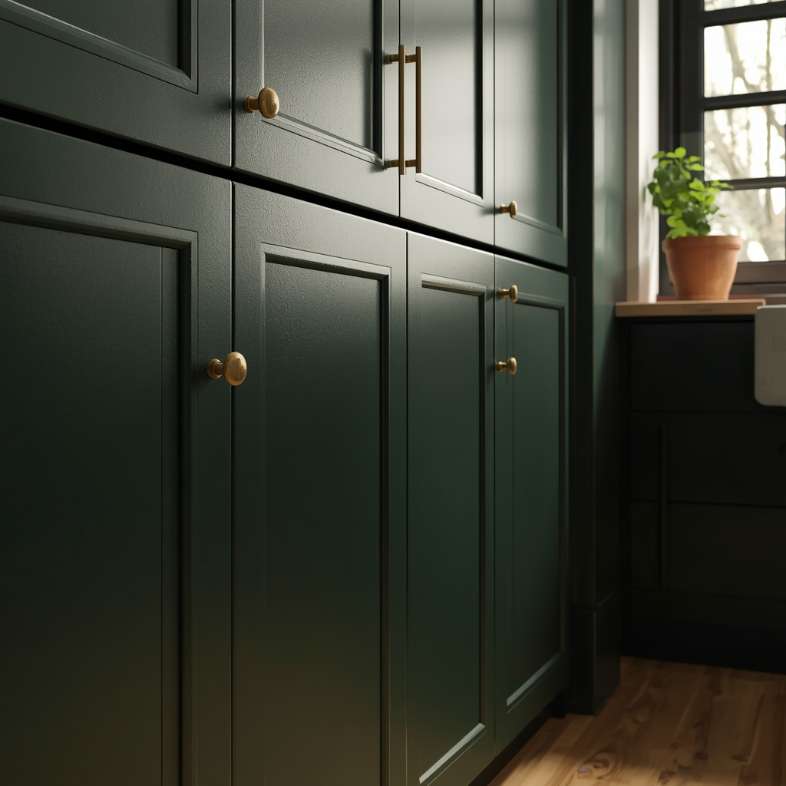
The cabinets are the biggest single design decision in any kitchen — and in a dark cottagecore kitchen, they carry the entire aesthetic foundation. The colour choice for dark cottagecore kitchen cabinets should come from the deepest, richest part of the natural palette: forest green, deep bottle green, aged black-green, midnight navy, dark charcoal, or deep plum-brown.
Forest green is the defining dark cottagecore cabinet colour of 2026 — and for good reason. It is simultaneously earthy and dramatic, natural and sophisticated.
Budget approach: A quart of chalk paint for small kitchens (20to35), full cabinet painting project (50to150 in materials for DIY).
Design Tips:
- Sand cabinet fronts lightly before painting for the best adhesion and most even colour.
- A flat finish chalk paint gives the most historically authentic, aged dark cottagecore quality.
- Leave the interior of cabinets a lighter neutral colour — the contrast creates depth.
- Dark hardware — black iron, aged brass, or bronze — completes the transformation.
2. Open Shelving Styled With Intention — Abundance Without Clutter
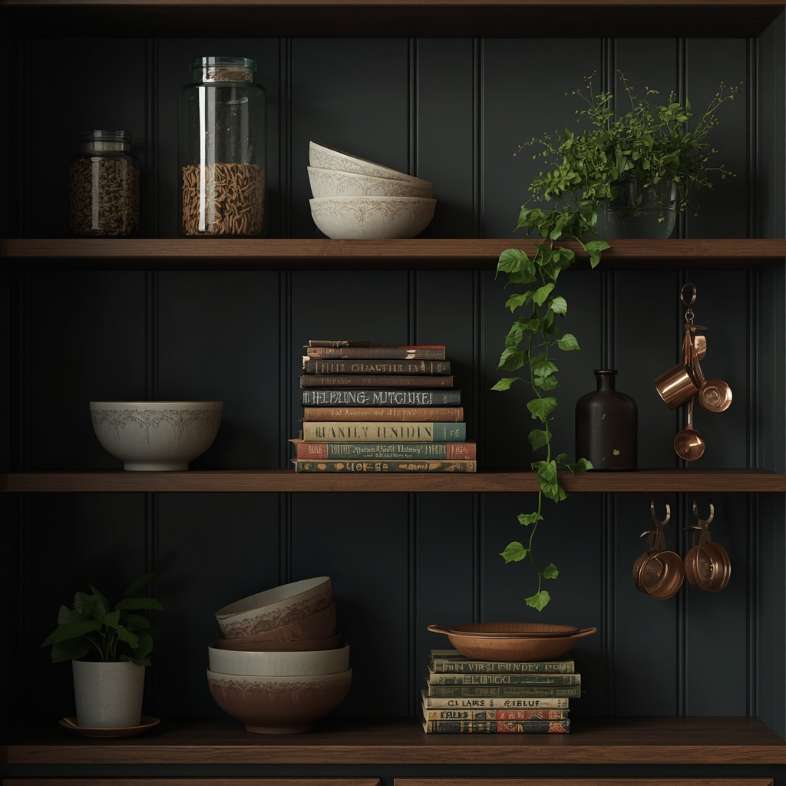
Open shelving in a dark cottagecore kitchen is not the minimalist floating shelf aesthetic of a Scandinavian kitchen. It is the opposite: shelves that tell a story of accumulation, of usefulness, of a person who cooks with everything they have collected and loves every piece.
Budget approach: Wooden boards from a hardware store cut to size (15to30), simple metal brackets (5to10), dark walnut stain ($12).
Design Tips:
- Arrange objects in groups of three with varying heights.
- Use the top shelf for decorative items and dried botanicals.
- Glass jars with dark lids or cork stoppers filled with grains add both function and beauty.
3. Dark Wooden Countertops and Surfaces — Warmth With Character
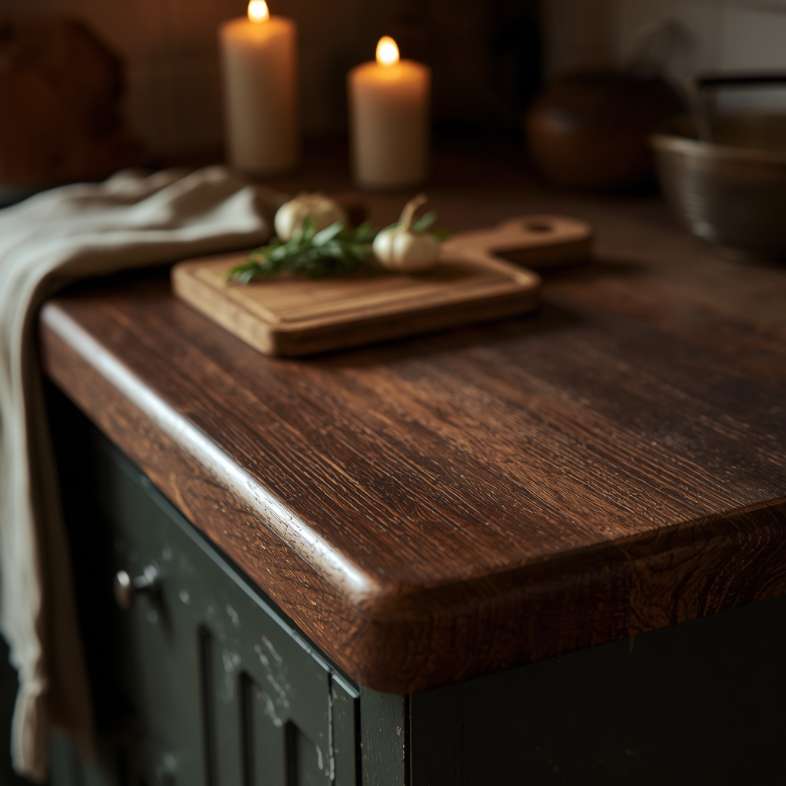
Natural wood countertops — particularly in darker stains or naturally aged timber — are one of the most defining surfaces of the dark cottagecore kitchen.
Budget approach: IKEA butcher block countertop + dark stain (80to200 for small kitchens), contact paper alternative (15to25).
Design Tips:
- Dark walnut stain applied in two thin coats creates more depth.
- Allow wood countertops to age naturally — imperfections are part of the aesthetic.
- A beeswax finish over dark stain gives a warm, authentic sheen.
4. Copper and Aged Brass Hardware and Cookware — The Warmth Detail
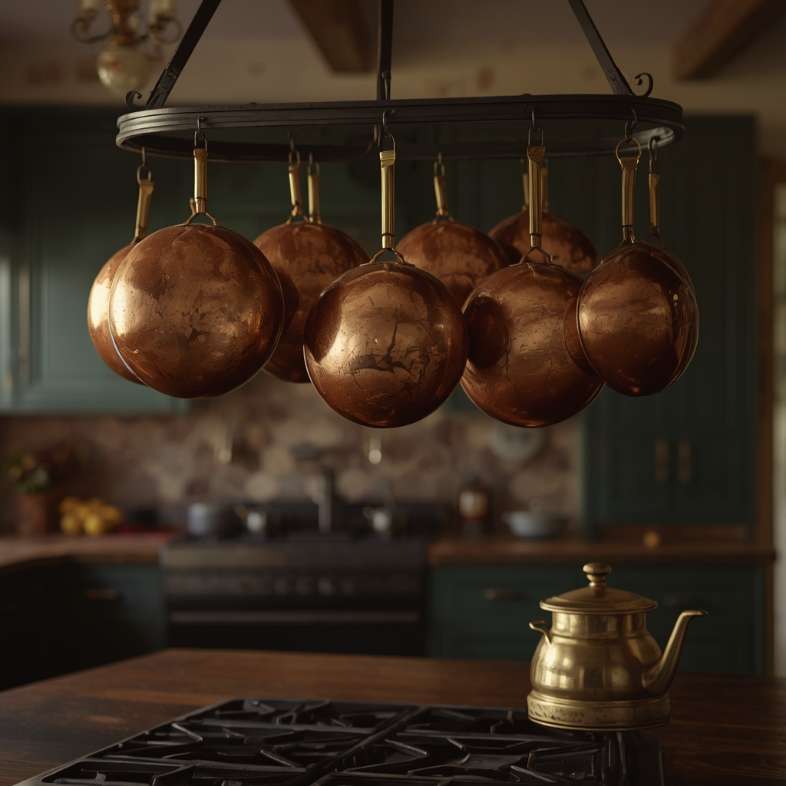
In a dark cottagecore kitchen, the metal accents are not polished chrome or brushed steel. They are copper, aged brass, and darkened bronze — metals that develop patina over time.
Budget approach: Aged brass cabinet pulls from Amazon (25to60 for a full kitchen), thrifted copper cookware (5to20 per piece).
Design Tips:
- Allow copper and brass to develop their natural patina — the aged quality is the aesthetic point.
- A simple ceiling rail or S-hook system for hanging copper pots costs under $30.
- Mix practical and purely decorative copper objects.
5. Moody Botanical Elements — Plants, Dried Herbs, and Foraged Beauty
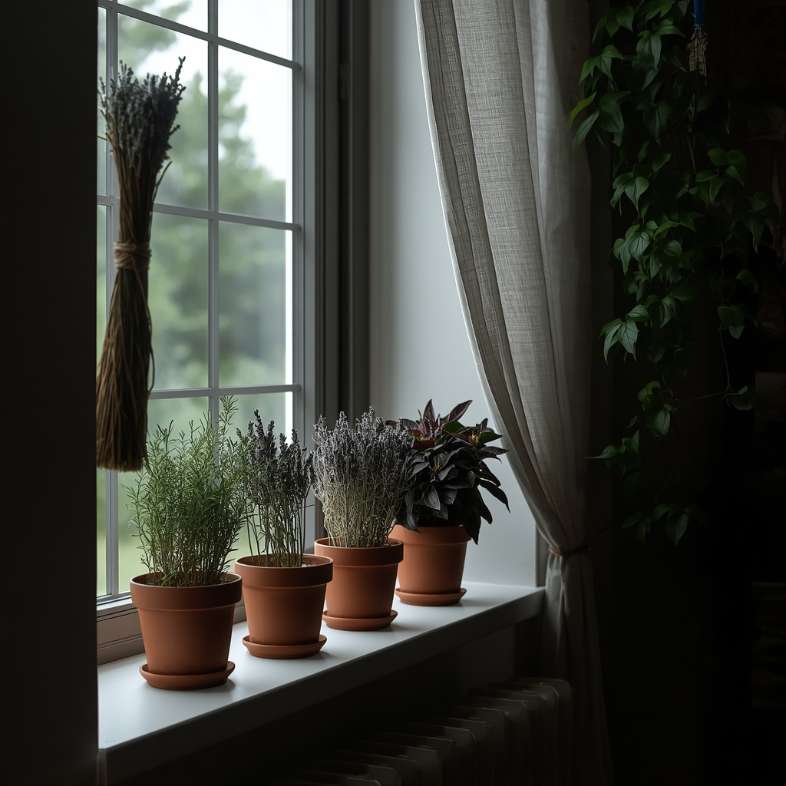
Plants and botanical elements are the living soul of a dark cottagecore kitchen. Dark-leaved plants like black velvet alocasia, dark purple tradescantia, or deep green heartleaf philodendrons trail from high shelves and window sills.
Budget approach: Plant propagations from friends (free), grocery store herb plants (2to4), dried herb bunches (3to8).
Design Tips:
- Hang dried herb bunches from cabinet knobs, curtain rails, and ceiling hooks.
- Dark-leaved plants add drama — seek out purple waffle plant or black mondo grass.
- Style plant pots consistently — terracotta, dark ceramic, and aged stone pots belong here.
6. Stone and Tile Backsplash — Texture and Depth on the Wall
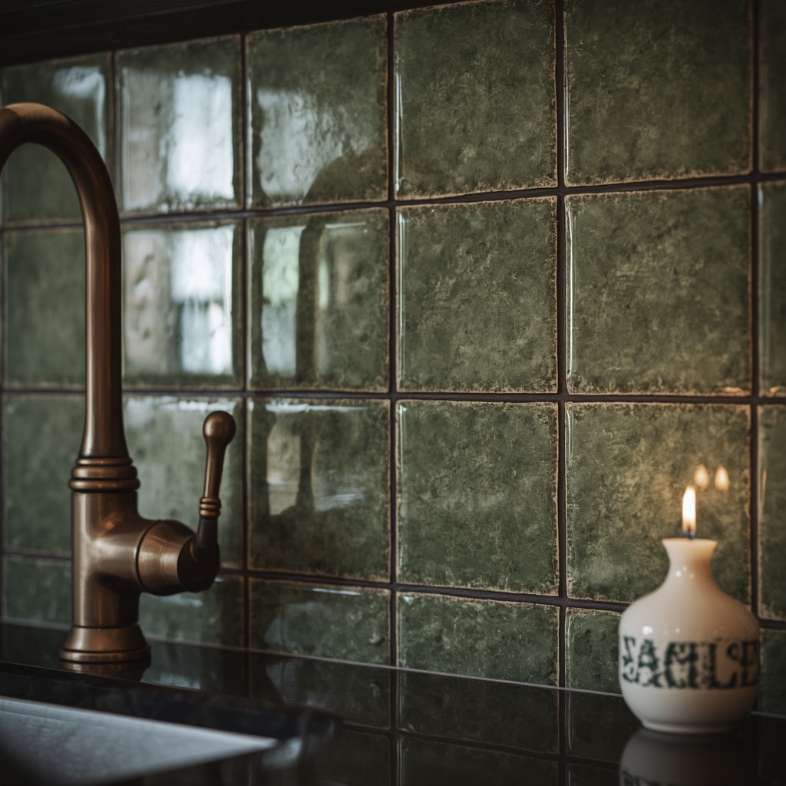
The backsplash in a dark cottagecore kitchen is never flat or uniform. Textured stone, handmade tiles, and dark grout are essential.
Budget approach: Peel-and-stick textured tile panels (20to40), re-grouting with dark grout (15to25 in materials).
Design Tips:
- Re-grouting a white-grouted tile backsplash with dark charcoal grout is a high-impact low-cost transformation.
- Handmade tiles with natural glaze variation look more authentic.
- Carry the backsplash higher than standard — up to the underside of the upper cabinets.
7. Wicker, Rattan, and Woven Texture — Organic Softness in a Dark Space
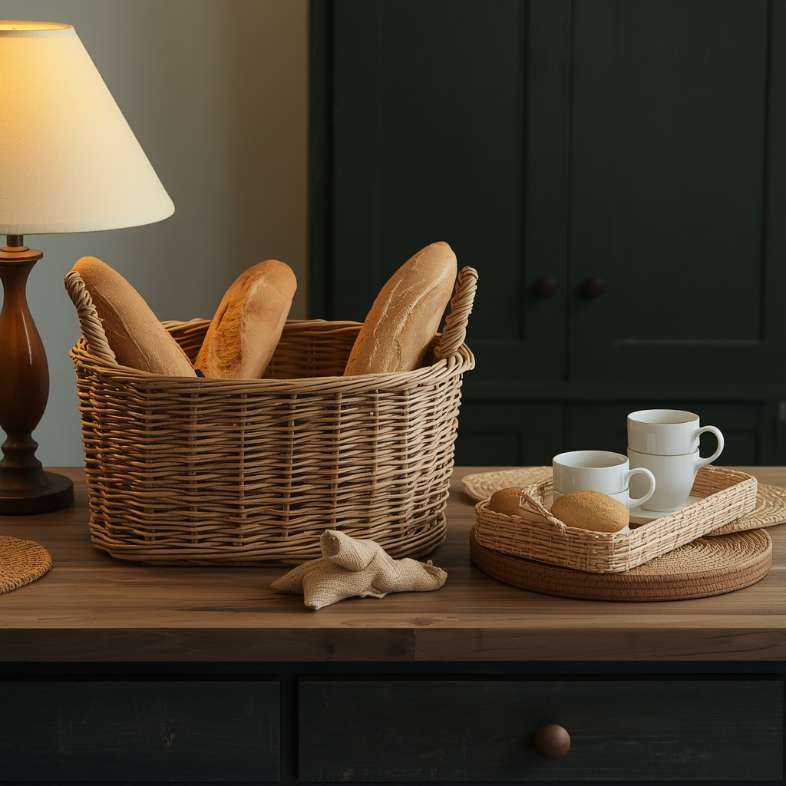
Wicker baskets, rattan storage, woven placemats, and linen textiles provide softness to balance the drama of deep colours.
Budget approach: Thrift stores for wicker baskets (1to5 each), jute rope for DIY hanging storage (8to15).
Design Tips:
- Store practical items in wicker baskets on open shelves.
- A wicker bread basket, utensil holder, and fruit bowl creates cohesive texture.
- Natural undyed wicker reads more authentically than painted wicker.
8. Dark Painted Walls or Feature Wall — Committing to the Mood
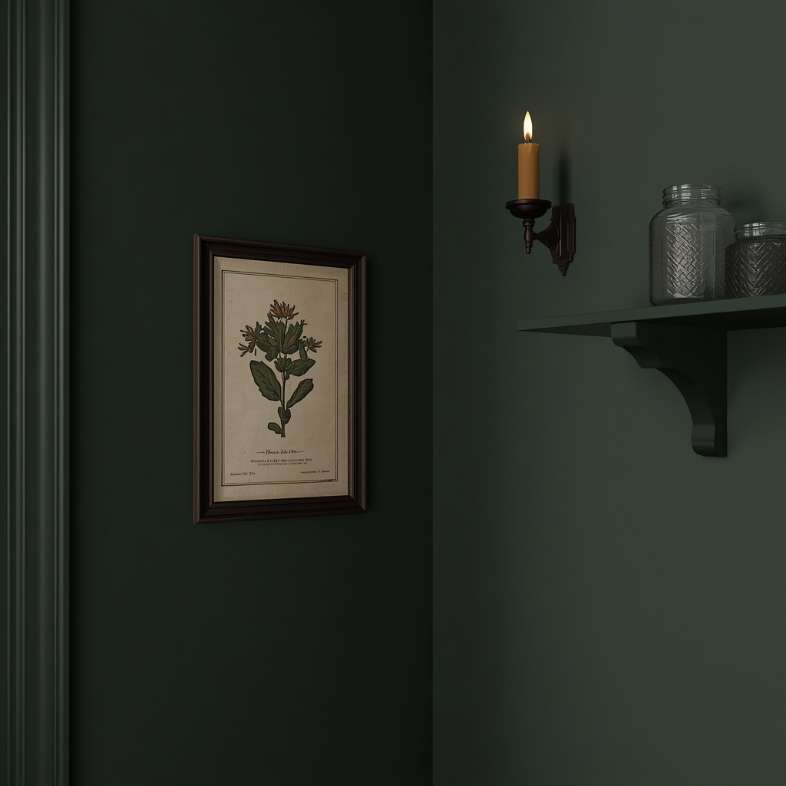
A dark cottagecore kitchen that keeps its walls white is fighting itself. Even one feature wall in a deep, atmospheric colour transforms the space.
Budget approach: One litre of deep matte wall paint for an accent wall (20to35), dark botanical removable wallpaper for renters (25to50 per panel).
Design Tips:
- Matte or flat finish creates more atmospheric depth than eggshell.
- Paint the ceiling slightly lighter than the walls to maintain height.
- Test your wall colour in the kitchen specifically — light changes everything.
9. Vintage and Foraged Decorative Objects — Objects With History
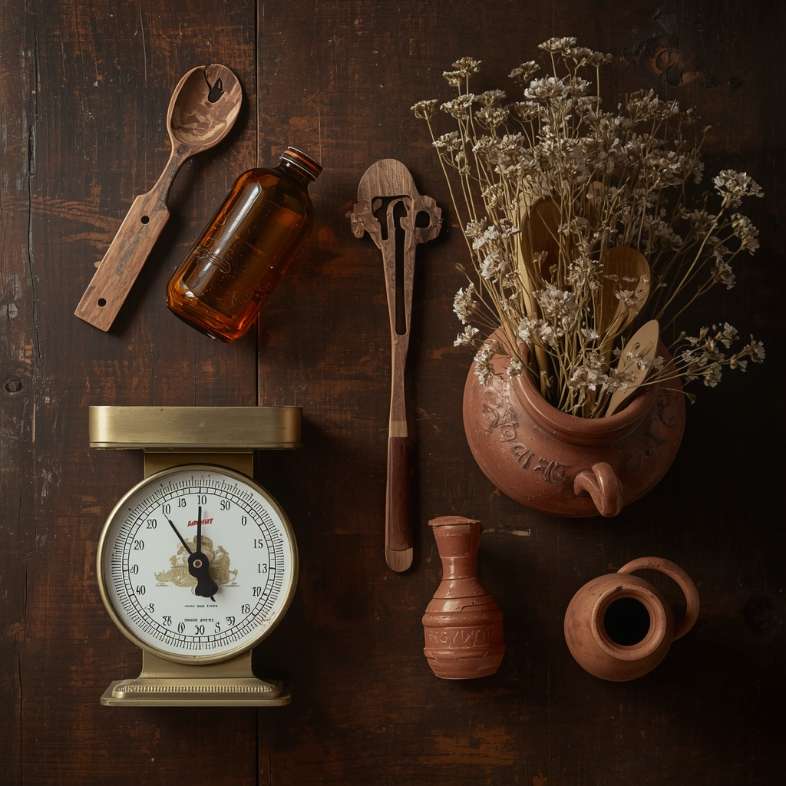
Nothing in a dark cottagecore kitchen was bought as a set. Vintage scales, old glass bottles, antique ceramic crocks, and worn recipe books are the soul of the space.
Budget approach: Thrift stores (1to8 each), dark glass bottle collection (free from recycling), farmer’s markets for interesting ceramics (5to20).
Design Tips:
- Buy one distinctive piece rather than many generic ones.
- Objects displayed in groupings of three or five look more intentional.
- Patina and wear are features, not flaws.
10. Low, Warm Lighting — Setting the Mood That Makes Everything Else Work
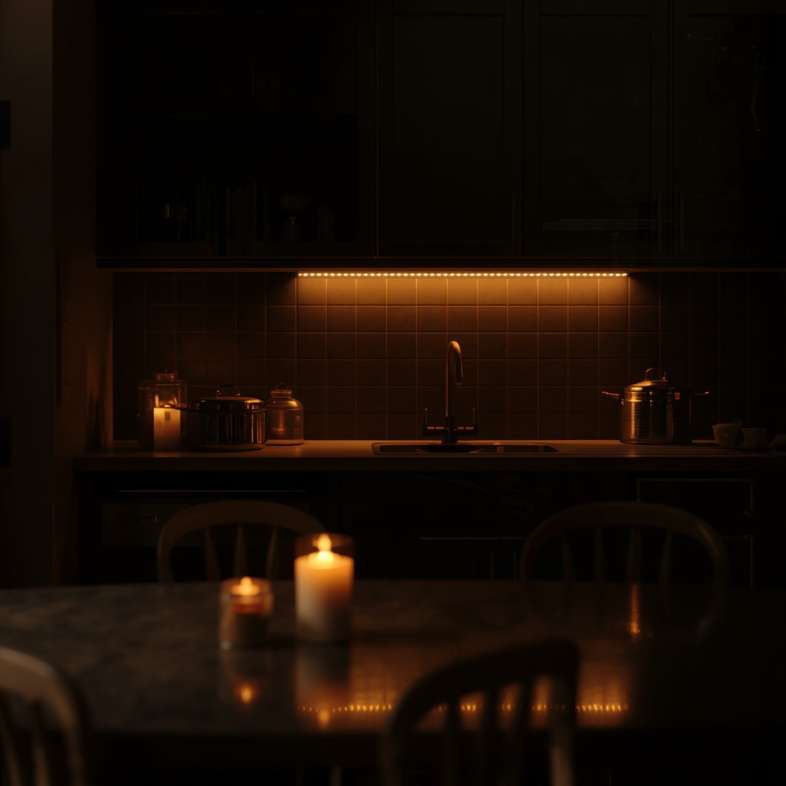
A dark cottagecore kitchen is only as atmospheric as its lighting. Warm, layered lighting at 2700K or below is non-negotiable.
Budget approach: Warm LED bulb replacements (15to30 for a full kitchen), pillar candles (5to12), battery-operated warm LED string lights (10to18).
Design Tips:
- Replace every bulb with 2700K or below before spending anything else.
- Under-cabinet lighting (plug-in LED strips under $20) transforms the countertop area.
- A lantern with a candle or flickering LED creates an outdoor-indoor quality.
Dark Cottagecore Kitchen by Budget — At a Glance
| Budget Level | What to Focus On | Estimated Cost |
|---|---|---|
| 0to30 | Rearrange existing objects, collect dark glass bottles, change bulbs to 2700K | 10to25 |
| 30to100 | Add wicker baskets, change hardware to aged brass, buy a statement plant | 35to90 |
| 100to300 | Paint one wall or cabinet, add peel-and-stick botanical wallpaper, add a pendant light | 120to280 |
| 300to600 | Paint all cabinets, install floating shelves, add under-cabinet lighting | 300to580 |
| $600+ | Full cabinet repaint, countertop replacement, backsplash installation, complete overhaul | $600+ |
Renter-Friendly Dark Cottagecore Kitchen Ideas (No Permanent Changes)
- Removable dark wallpaper on one accent wall.
- Contact paper in dark wood grain on cabinet fronts and countertops.
- Replace cabinet hardware (keep originals to reinstall).
- Freestanding furniture — a dark-stained kitchen trolley or vintage dresser.
- Curtains hung from tension rods in dark botanical prints.
- Plug-in under-cabinet lights, table lamps, string lights, and candles.
- Styling and botanicals — wicker baskets, plants, dried herbs, copper objects.
Pros and Cons of the Dark Cottagecore Kitchen Aesthetic
| Factor | Pros | Cons |
|---|---|---|
| Atmosphere | Deeply warm, moody, and atmospheric — unlike any other kitchen aesthetic | Requires commitment — half-measures rarely work |
| Budget | Many elements achievable affordably via thrifting and DIY | Countertops and backsplash can involve real investment |
| Maintenance | Natural materials develop beautiful patina | Wood and copper require more care than synthetics |
| Resale value | Deep, dramatic kitchens photograph exceptionally well | Very personal — may not appeal to all buyers |
| Small kitchens | Works beautifully in compact spaces with proper lighting | Poor lighting can make it feel cave-like |
| Renter-friendly | Many elements are removable and non-permanent | Painted cabinets need landlord permission |
| Personality | One of the most characterful kitchen aesthetics | Not a neutral starting point — a committed direction |
Frequently Asked Questions (FAQ)
Does a dark cottagecore kitchen make a small kitchen feel smaller?
Not if the lighting is handled correctly. A dark kitchen with excellent layered warm lighting at multiple heights feels enveloping and intimate rather than small and dark. A dark kitchen with poor overhead lighting feels like a basement. Prioritise warm, layered light over everything else.
What is the difference between dark cottagecore and dark academia in the kitchen?
Dark cottagecore is rooted in the natural world — botanical abundance, foraged elements, natural materials like wood and copper, and a connection to cooking. Dark academia leans more bookish and austere. Dark cottagecore is warmer, more abundant, and more connected to the pleasures of food.
What colours work best for a dark cottagecore kitchen?
Forest green is the defining colour of 2026. Deep navy, dark charcoal, aged black, dark plum-brown, and deep slate grey are excellent alternatives. Warm undertones work better than cool ones to prevent the space from feeling cold.
Can I achieve a dark cottagecore kitchen without painting my cabinets?
Yes. Focus on: dark botanical removable wallpaper, aged brass hardware replacement, warm lighting, dark decorative objects, plants and dried botanicals, dark wood cutting boards, and dark linen curtains. These create a significant shift even against light-coloured cabinets.
How do I make a dark cottagecore kitchen feel cosy rather than gloomy?
Cosiness comes from three things: warm lighting (2700K or warmer, layered), natural organic materials (wood, ceramic, wicker, copper, linen), and abundant botanical life (plants, herbs, dried flowers). Any dark kitchen that is cold, synthetic, and without plants will feel gloomy.
What plants work best in a dark cottagecore kitchen?
For good natural light: trailing pothos, heartleaf philodendron, dark-leaved tradescantia, rosemary, thyme, dark basil, sage. For low light: pothos, cast iron plants, ZZ plants, snake plants. Dried botanicals work in any light.
Build the Kitchen That Feels Like Coming Home
The best kitchens are not the ones that photograph well in a magazine spread under professional lighting. They are the ones that make you want to be in them. That make cooking feel like a pleasure rather than a task. That hold a warmth and a character that you feel when you walk in first thing in the morning.
The dark cottagecore kitchen creates that feeling more reliably than almost any other kitchen aesthetic. The deep colours do not make the room feel heavy — they make it feel held. The natural materials do not make it feel rustic — they make it feel real. The plants and the copper and the wicker and the warm light do not make it feel decorated — they make it feel lived in.
Start with one element. Change the light bulbs to the warmest you can find. Put a plant on the windowsill. Find a wicker basket at a thrift store and put it on the open shelf. Buy a bunch of rosemary and hang it from a cabinet knob.
The kitchen will start telling you what it wants next.
Save this to your home decor Pinterest board and share your dark cottagecore kitchen in the comments — we would love to see every version.
Primary keyword: dark cottagecore kitchen
Supporting keywords: moody cottagecore kitchen decor, dark academia kitchen aesthetic, forest witch kitchen, dark green kitchen cabinets cottagecore, moody vintage kitchen 2026